AWD Won't Save You on Ice — and Millions of Drivers Haven't Figured That Out Yet
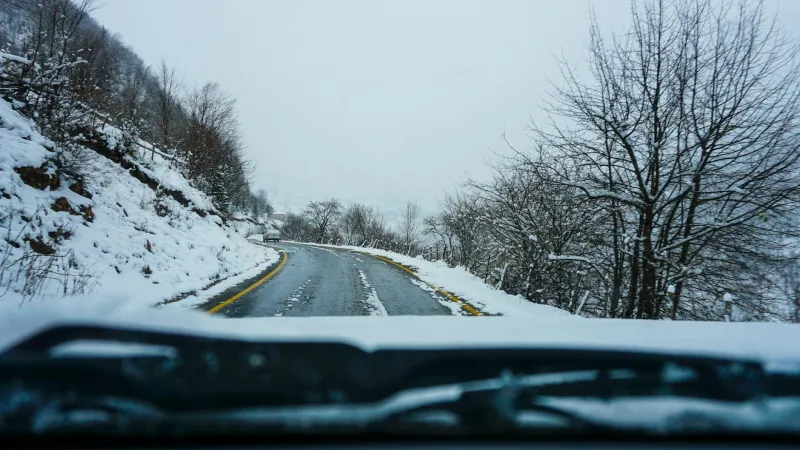
AWD Won't Save You on Ice — and Millions of Drivers Haven't Figured That Out Yet
Every winter, you see them — large SUVs and crossovers flying past slower traffic on a snow-covered highway, their drivers radiating a quiet confidence that comes from having a badge on the tailgate that says AWD or 4WD. There's a sense of security that comes with all-wheel drive, and for millions of American drivers, it feels completely justified.
That feeling is one of the most dangerous things on the road in winter.
Not because AWD doesn't work — it does exactly what it's designed to do. The problem is that what it's designed to do and what most drivers believe it does are two very different things. And that gap in understanding contributes to a predictable wave of winter accidents every single year.
What AWD Actually Does (And Only Does)
Let's be precise about the mechanics, because this is where the myth lives.
All-wheel drive systems distribute engine power to all four wheels simultaneously, rather than just two. The practical effect of this is improved traction during acceleration. When you're trying to get moving from a stop, or maintain momentum going uphill on a slippery surface, having power going to all four wheels instead of two makes a meaningful difference. The vehicle is less likely to spin its tires and more likely to move in the direction you want.
That's genuinely useful. Nobody is saying AWD is worthless.
But here's the part that gets left out of every SUV commercial: AWD has no effect on braking, and minimal effect on steering. When you press the brake pedal, the system that matters is your brakes — and all four wheels are braking regardless of whether you have AWD, front-wheel drive, or rear-wheel drive. The physics of a tire trying to stop on ice doesn't change based on how many wheels are being driven.
The same goes for cornering. Your ability to navigate a curve on a slippery road is determined by tire grip, vehicle weight, and speed — not by how many wheels are receiving power from the engine.
The Overconfidence Problem
Research on this is pretty consistent: AWD and 4WD drivers are involved in winter accidents at rates that don't match the safety advantage the technology actually provides. The reason isn't that the systems are faulty. It's that drivers adjust their behavior based on a misunderstanding of what those systems do.
If you believe your vehicle is fundamentally safer in winter, you drive faster. You follow more closely. You brake later. You take curves with more confidence than the road surface warrants. Every one of those adjustments erodes the real-world safety margin — and since AWD does nothing to help you stop or steer, the result is a vehicle traveling faster toward a situation it cannot handle.
Emergency responders and winter driving instructors have been saying this for years. The most dangerous vehicles on snowy roads aren't the small sedans with all-season tires. They're the large AWD SUVs driven by people who forgot — or never knew — what that badge actually means.
4WD Is a Different System, But the Same Misunderstanding
Four-wheel drive, found mostly on trucks and body-on-frame SUVs, works differently than AWD but suffers from the same misunderstanding. Traditional 4WD systems lock the front and rear axles together, which provides serious traction in low-speed off-road situations. In high-speed on-road conditions, that same locked axle setup can actually make handling worse on dry pavement.
Most modern 4WD systems have multiple modes for this reason — including a 2H (two-wheel high) setting intended for normal driving. But the cultural association between 4WD and winter invincibility is so strong that many drivers engage 4WD and treat it as a universal safety upgrade.
Again: it helps you move. It does not help you stop.
What Actually Keeps You Safe on Winter Roads
If AWD isn't the answer, what is? Two things matter far more than drivetrain configuration.
Tires are the single biggest variable in winter driving safety. A front-wheel-drive vehicle on proper winter tires will outperform an AWD vehicle on all-season tires in virtually every meaningful safety scenario — including braking and cornering. Winter tires are made from a rubber compound that stays pliable in cold temperatures and have tread patterns specifically designed to channel snow and bite into ice. The difference in stopping distance on a snowy road between winter tires and all-seasons is not subtle — it can be the difference between stopping in time and not.
All-season tires are a compromise. They're fine for most of the country most of the time. But if you live somewhere that sees real winter weather — and you're depending on your AWD badge to keep you safe — you're relying on the wrong thing.
Speed and following distance are the other half of the equation. No tire, no drivetrain system, and no amount of technology overrides the physics of a vehicle traveling too fast for road conditions. Winter driving safety is largely about giving yourself enough time and space to respond — which means slowing down and leaving far more room than feels necessary.
The Takeaway
AWD is a useful feature. It genuinely helps in specific situations, and there's nothing wrong with having it. The problem is the story that gets sold alongside it — the implication that it makes winter driving broadly safer when it only addresses one narrow part of the equation.
Before the next snowstorm, the most valuable thing you can do isn't check that your AWD is engaged. It's check your tires, slow down, and remember that the system keeping you safe is physics — not a badge on your tailgate.