Your Mechanic's Most Profitable Lie: Why Both Brakes Don't Actually Need Replacing
The Brake Shop's Favorite Phrase
"We need to replace both sides for safety." If you've ever had brake work done, you've probably heard this exact phrase. It sounds reasonable, even responsible. After all, who wants to compromise on braking safety?
But here's what most drivers don't know: the vast majority of brake problems are asymmetrical. One side wears faster than the other due to road crown, driving habits, or simple manufacturing tolerances. Yet shops routinely recommend — and charge for — replacing both sides simultaneously.
The practice is so common that most customers never question it. That's exactly what makes it profitable.
The Real Science Behind Brake Wear
Brake systems are designed with intentional redundancy. Each wheel can stop independently, and the system can safely operate with different wear levels between sides. In fact, perfectly matched brake wear is actually unusual and often indicates a problem with the brake proportioning system.
Normal brake wear patterns show the left side wearing 10-20% faster than the right side in most vehicles. This happens because of road crown (the slight slope that helps water drain), which puts more weight on the left wheels during normal driving. Add in parking lot turns, freeway on-ramps, and daily driving patterns, and asymmetrical wear becomes inevitable.
Yet shops continue to present symmetrical replacement as a safety requirement rather than a convenience option.
When "Both Sides" Actually Makes Sense
There are legitimate scenarios where replacing both sides simultaneously is warranted:
Hydraulic system contamination: If brake fluid has been contaminated with moisture or debris, both sides of the system need attention regardless of pad wear levels.
Caliper seizure: When a brake caliper sticks, it can cause rapid, uneven wear that affects system balance. Replacing only the damaged side might create a pull or uneven braking feel.
Complete system age: On vehicles with over 100,000 miles where no brake work has been performed, replacing both sides often makes economic sense due to labor overlap.
But here's the key: these situations represent maybe 20% of brake jobs. The other 80% involve normal, asymmetrical wear where one side genuinely needs replacement and the other has months or years of life remaining.
The Questions That Reveal the Truth
When a shop recommends replacing both sides, ask these specific questions:
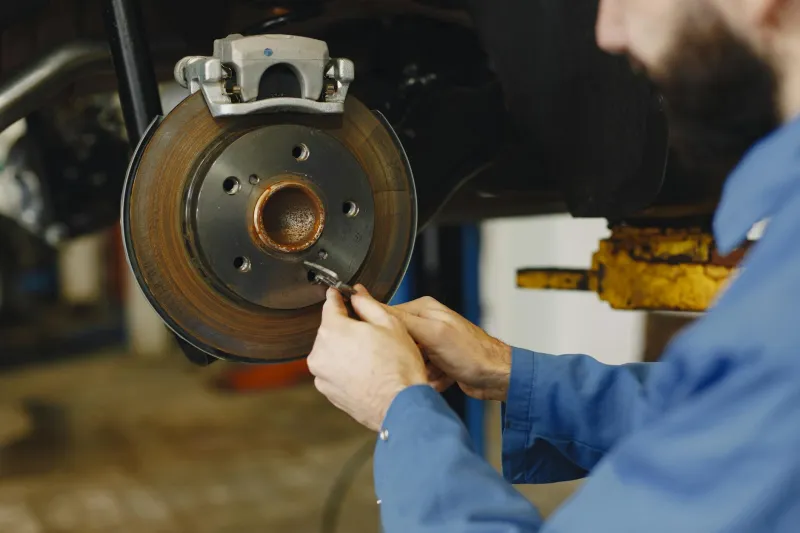
"What's the actual thickness measurement on each side?" Brake pads have minimum thickness specifications, usually around 3-4mm. If one side measures 2mm and the other measures 6mm, you're being sold unnecessary work on the 6mm side.
"Can I see the brake pads myself?" Any legitimate shop will show you the actual components. Worn pads are obvious — metal backing plates become visible, and the friction material looks thin or uneven.
"What happens if I only replace the side that actually needs it?" The answer should be technical and specific, not vague safety warnings.
The Labor Markup That Drives the Upsell
Here's where the economics get interesting: brake jobs have high labor content relative to parts cost. Once a technician has removed wheels and accessed the brake system, the additional labor to replace the second side is minimal — maybe 20-30 minutes.
But shops charge full labor rates for both sides. A job that costs $150 in additional labor generates $400-500 in additional revenue when parts markup is included. That's a compelling profit margin for work that may not be necessary.
Shops justify this by claiming it prevents callbacks — customers returning when the other side fails weeks or months later. But callbacks only matter if the other side is actually close to failure, which brings us back to the measurement question.
How to Navigate the Brake Shop Conversation
The key is shifting from emotional safety appeals to technical specifics. Don't let the conversation stay at "both sides for safety." Push for actual measurements, specific failure modes, and timeline estimates.
A competent technician can tell you exactly how much life remains on the "good" side based on current thickness, your driving patterns, and typical wear rates. If they can't or won't provide that information, you're probably dealing with a sales-driven recommendation rather than a technical one.
The Independent Inspection Option
If you're getting conflicting advice or feel pressured into unnecessary work, consider a independent inspection. Many tire shops and quick-lube places will measure brake thickness for free as part of their standard inspection process.
This isn't about finding the cheapest option — it's about getting accurate information. A second opinion that confirms both sides actually need replacement validates the original recommendation. One that shows significant remaining life on one side reveals the upsell.
The Real Safety Consideration
The irony is that unnecessary brake work can actually reduce safety. Installing new pads on one side while leaving worn (but serviceable) pads on the other creates a temporary imbalance as the new pads break in. During the first few hundred miles, braking feel and stopping distances can actually be worse than before the service.
Proper brake service matches the work to the actual condition of the components, not to the shop's revenue targets.
What Professional Fleet Managers Do
Commercial fleet managers — who maintain hundreds of vehicles and track every maintenance dollar — almost never authorize symmetrical brake replacement unless both sides have actually failed. They use measurement-based replacement schedules and detailed cost tracking to optimize safety and economics.
Their approach is simple: replace what's worn, maintain what's serviceable, and document everything. Individual car owners can follow the same approach by demanding the same level of technical justification.
The Bottom Line
Your brakes are too important for guesswork, but they're also too expensive for unnecessary work. The next time you hear "both sides for safety," remember that real safety comes from addressing actual problems, not imaginary ones.
Ask for measurements, demand specifics, and don't be afraid to get a second opinion. Your wallet — and your actual safety — will benefit from the extra diligence.