Your Car Battery Didn't Die in the Cold — It Was Already Gone
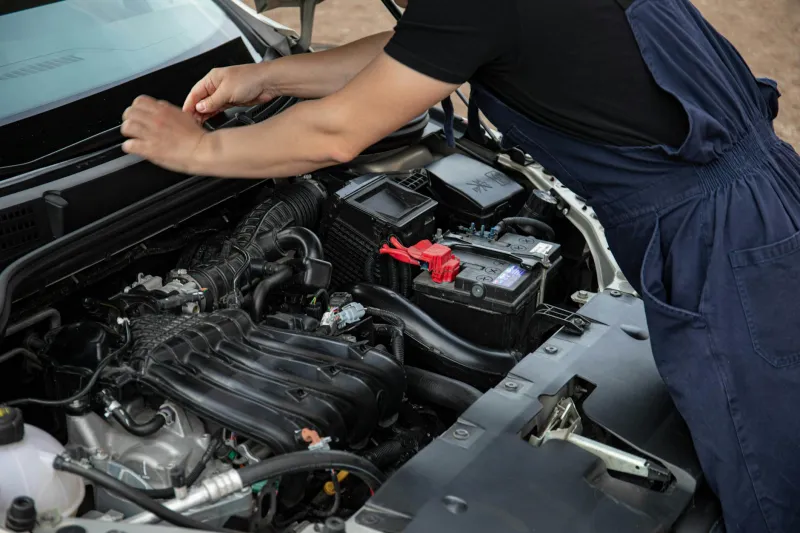
Your Car Battery Didn't Die in the Cold — It Was Already Gone
It happens every winter like clockwork. The temperature drops overnight, you head out to your car in the morning, turn the key, and get nothing but a sad clicking sound or a sluggish groan from the starter motor. The natural conclusion: the cold killed your battery.
Except that's almost never what actually happened.
Cold weather doesn't kill car batteries. What it does is expose batteries that were already on their way out — batteries that had been quietly losing capacity for months, running just well enough in mild fall temperatures to avoid detection, and finally hitting a wall when winter arrived and demanded more from them than they had left to give.
The real villain in this story isn't January. It's July.
How a Lead-Acid Battery Actually Loses Capacity
The overwhelming majority of car batteries on American roads are lead-acid batteries — a technology that's been around since the 1800s and still dominates the market because it's affordable and reasonably reliable. But understanding why they fail requires a quick look at what's happening inside.
A lead-acid battery works through a chemical reaction between lead plates and sulfuric acid. Every time the battery discharges and recharges, a small amount of lead sulfate crystalizes on the plates in a process called sulfation. Under normal conditions, the charging process reverses most of this. But over time, some of those crystals harden and become permanent, gradually reducing the surface area available for the chemical reaction.
The result is a battery that looks fine on a basic voltage test but has significantly less usable capacity than it did when it was new. It can still start your car on a 60-degree morning. It just can't necessarily do it on a 15-degree one.
Why Summer Is the Actual Killer
Here's what most people get completely backwards: heat — not cold — is what accelerates battery degradation.
High temperatures speed up the chemical reactions inside a battery, which sounds like a good thing until you realize that includes the reactions that break down the battery's internal components. Heat causes fluid loss through evaporation, accelerates plate corrosion, and dramatically speeds up the sulfation process. A battery living through a brutal Phoenix summer is aging far faster than the same battery sitting through a Minnesota winter.
Studies from the Battery Council International have consistently shown that batteries in hot-climate states fail at significantly higher rates and shorter lifespans than those in cooler regions. The irony is that the damage happens in summer, but the failure often shows up in winter — which is why so many people blame the cold.
The cold does play a role, but not in the way most people imagine. Low temperatures slow down the chemical reactions inside the battery, reducing its ability to deliver current. At 32°F, a battery has roughly 20 percent less cranking power than at 80°F. At 0°F, it can lose up to 40 percent. Meanwhile, cold weather makes your engine harder to start — thicker oil, tighter tolerances — so the battery has to work harder at the exact moment it's least capable of doing so.
A healthy battery handles this fine. A battery that's already lost significant capacity due to a summer of heat damage? That's the one that leaves you stranded on a Tuesday morning in February.
The Lifespan Misunderstanding
Most car owners have a vague sense that batteries last "about five years" and don't think much beyond that. But battery lifespan is highly variable and depends heavily on climate, driving habits, and vehicle electrical demands.
Short trips are particularly hard on batteries. If your daily commute is mostly brief drives, your alternator may never have enough time to fully recharge the battery after startup — and repeated partial discharges accelerate sulfation. Vehicles with high electrical loads (think: heated seats, multiple phone chargers, large infotainment systems) put extra strain on the battery over time.
A battery in a hot climate driven mostly on short trips might be significantly degraded by year three. A battery in a mild climate with mostly highway driving might still be going strong at year six. The "five-year rule" is an average, not a guarantee, and it tells you nothing about the actual condition of your specific battery.
What a Voltage Test Doesn't Tell You
Many drivers — and even some quick-lube shops — rely on a basic voltage test to assess battery health. A resting battery that reads 12.6 volts gets a passing grade and off you go.
The problem is that voltage alone doesn't measure capacity. A battery can read normal voltage while having lost a substantial portion of its usable cranking power due to internal plate degradation. The test that actually matters is a load test or, better yet, a conductance test — both of which measure how much current the battery can actually deliver under real-world demand.
Any auto parts store will do this test for free, and it takes about two minutes. It's the difference between knowing your battery has a pulse and knowing it can actually do its job.
The Takeaway
Don't wait for a cold morning to find out your battery is failing. If your battery is three years or older, get it load-tested before winter — not after the first cold snap. The cold didn't kill your battery. It just finally made the problem impossible to ignore.
The real maintenance window is late summer or early fall, right after the heat has done its worst. That's when you have time to replace a marginal battery on your own schedule instead of a parking lot in January.