Your Gas Tank Door's Location Was Never a Master Plan — Just Random Corporate Decisions
Your Gas Tank Door's Location Was Never a Master Plan — Just Random Corporate Decisions
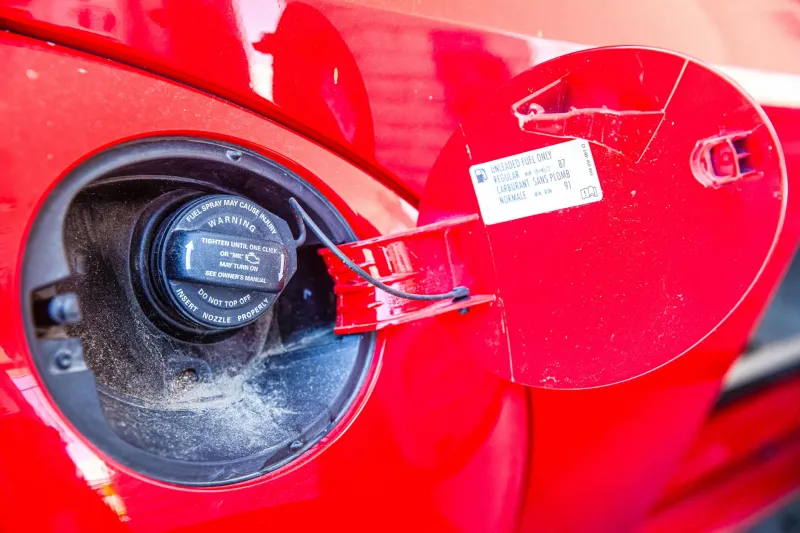
Pull into any gas station and watch drivers circle around, trying to remember which side their fuel door is on. Some confidently swing left, others drift right, and a few sheepishly realize they've chosen wrong and need to back out. Most of us assume there's some engineering logic behind fuel door placement — maybe it's safer on the driver's side, or perhaps it balances the car's weight distribution, or follows some international safety standard.
The actual truth? There's no master plan whatsoever.
The Myth of Strategic Placement
Drivers often develop theories about their car's fuel door location. "It's on the driver's side for convenience," some say. Others insist, "It's on the passenger side so you're farther from traffic when filling up." European car owners might claim their fuel doors follow continental driving patterns, while American car buyers assume domestic manufacturers put more thought into local driving habits.
These explanations sound reasonable, but they're all wrong. Car manufacturers don't follow any universal logic, safety protocol, or ergonomic principle when deciding fuel door placement. It's one of the most arbitrary design choices in automotive engineering.
What Actually Determines Fuel Door Side
The real factors behind fuel door placement are surprisingly mundane:
Manufacturing convenience plays the biggest role. Engineers design fuel systems around existing components like exhaust pipes, spare tire wells, and structural elements. The fuel door ends up wherever it fits best in the overall layout, not where it's most convenient for drivers.
Historical precedent within each brand creates loose patterns. Some manufacturers tend toward driver's side placement simply because that's what they've always done, while others default to passenger side for equally arbitrary reasons. But even within the same brand, you'll find inconsistency across different models and years.
Cost considerations sometimes influence the decision. If routing fuel lines to one side requires fewer parts or simpler assembly, that's where the door goes. The savings might be minimal, but in mass production, every penny matters.
Platform sharing between different models can create weird inconsistencies. When manufacturers use the same basic chassis for multiple vehicles, the fuel door location might make perfect sense for a sedan but feel awkward on an SUV built from the same platform.
The Little Arrow Nobody Notices
Here's something that might actually surprise you: most cars manufactured after the 1990s have a small arrow next to the gas pump icon on the fuel gauge. This tiny arrow points toward whichever side your fuel door is on. It's probably the most useful feature you never knew existed.
This arrow exists precisely because fuel door placement is so random. Manufacturers realized drivers needed help remembering which side to use, especially in rental cars or borrowed vehicles. The arrow is automotive design acknowledging its own inconsistency.
Why the Confusion Persists
Drivers continue believing there's logic behind fuel door placement because we're pattern-seeking creatures. When something affects us regularly — like filling up with gas — we assume it was designed with intention. We create explanations that sound reasonable even when the reality is much more random.
The automotive industry hasn't helped clarify things. Marketing materials rarely mention fuel door placement, and salspeople often don't know the real reasons behind design choices. Even automotive journalists sometimes perpetuate myths about strategic fuel door positioning.
International Variations Don't Follow Rules Either
You might expect fuel door placement to follow driving patterns — right-hand drive countries favoring one side, left-hand drive countries choosing the other. But even this logical assumption falls apart under scrutiny.
Japanese cars sold in America don't consistently place fuel doors on any particular side, despite Japan's opposite driving orientation. German luxury brands show no clear pattern between models. Even within single vehicle lineups, you'll find fuel doors on both sides across different trim levels or years.
The Real Takeaway
Your fuel door's location isn't the result of careful engineering, safety studies, or ergonomic research. It's essentially a coin flip made during the design process, influenced by manufacturing constraints and historical habits rather than driver convenience.
This randomness explains why gas stations need pump hoses long enough to reach both sides of vehicles, why that little arrow exists on your dashboard, and why you still occasionally pull up to the wrong side of the pump even in your own car.
The next time you're at a gas station, look around at the various cars and their fuel door locations. You'll notice there's no pattern whatsoever — just a collection of arbitrary decisions that somehow became permanent features of vehicles we use every day. Sometimes the most mundane explanations are the most surprising ones.