The Myth of Gradual Brake Failure
Most drivers believe brake wear follows a predictable pattern: first you hear some squealing, then the pedal gets soft, maybe the car pulls to one side, and eventually you know it's time for service. This comforting narrative suggests brake problems give you plenty of warning before becoming dangerous.
The reality is far less forgiving. Brake failure often happens with shocking suddenness, leaving drivers who thought they were being responsible scrambling to understand what went wrong.
How Brake Wear Actually Progresses
Brake pads don't wear evenly or predictably. They start thick—usually around 10-12 millimeters of friction material—and gradually thin down to about 3-4 millimeters before replacement becomes critical. But this process isn't linear, and the warning signs most drivers expect don't appear when you'd think they would.
For the first 70% of a brake pad's life, performance remains virtually unchanged. Your car stops normally, feels normal, and gives no indication that anything is happening. The pad material is doing its job, converting kinetic energy to heat through friction against the rotor.
The problems begin in that final 30% of pad life, and they accelerate rapidly.
Why the Warning Signs Come Too Late
That squealing sound drivers associate with brake wear? It comes from a small metal tab designed to contact the rotor when pad thickness drops to about 2-3 millimeters. By the time you hear it, you're already in the danger zone.
The squeal isn't a maintenance reminder—it's an urgent warning that you're approaching complete pad failure. Many drivers treat it as the beginning of the replacement timeline, but it's actually near the end.
Worse, the squealer tabs don't always work as intended. They can break off, get clogged with debris, or simply fail to make consistent contact. Some drivers never hear the warning at all.
The Soft Pedal Problem
A soft or spongy brake pedal usually indicates air in the brake lines, not worn pads. By the time pad wear affects pedal feel, the friction material may be completely gone, leaving metal backing plates grinding against rotors.
This metal-on-metal contact creates that horrible grinding sound every driver dreads, but it also means your stopping power has already been severely compromised. The pedal might actually feel firmer at this point because there's direct metal contact, but your ability to stop safely is largely gone.
The Real Danger Zone
Once brake pads wear down to 2-3 millimeters, several things happen quickly:
- Heat dissipation becomes less effective, leading to brake fade
- The remaining pad material can crack or separate from the backing plate
- Metal components start contacting the rotor, causing rapid damage
- Stopping distances increase dramatically, especially under heavy braking
The transition from "slightly worn but functional" to "dangerous" can happen over just a few hundred miles of driving, depending on conditions.
Why Drivers Miss the Real Warning Signs
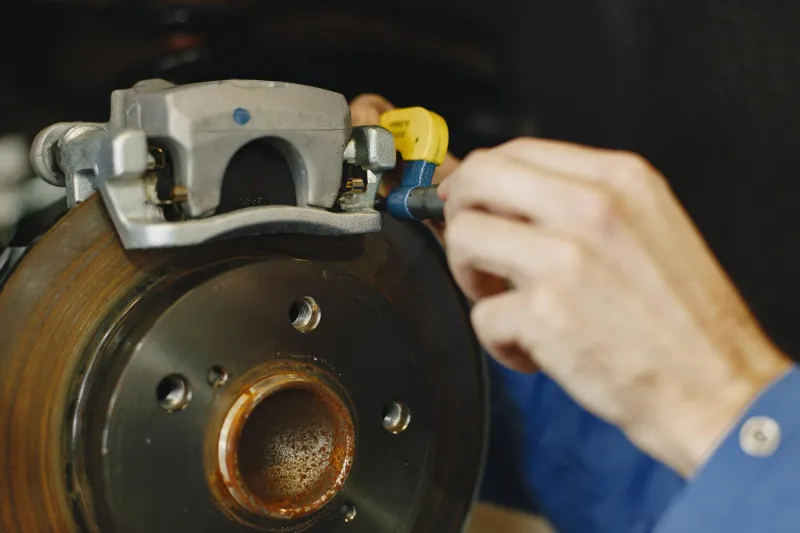
The most reliable indicator of brake wear isn't audible or tactile—it's visual. Brake pad thickness can be checked through the wheel spokes on most vehicles, but few drivers know what to look for or remember to check regularly.
Mechanics typically measure pad thickness during routine service, but many drivers skip regular inspections to save money, especially if the brakes "feel fine."
The irony is that by the time brakes don't feel fine, replacement costs have often doubled. Waiting too long means replacing rotors along with pads, turning a $200 service into a $500+ repair.
The Psychology of Brake Maintenance
Drivers treat brakes differently than other maintenance items because brake failure feels catastrophic in a way that, say, a dead battery doesn't. This fear leads to two opposite behaviors: either obsessive worry about every small noise, or complete avoidance until problems become impossible to ignore.
The automotive industry hasn't helped by marketing brake service as something you do "when you hear the squeal." This reactive approach treats brake maintenance like changing a smoke detector battery—wait for the warning, then act.
What Actually Works
Reliable brake maintenance requires proactive inspection, not reactive response to symptoms. Professional inspection every 15,000-20,000 miles, or visual checks every few months, can catch wear before it becomes dangerous.
Modern brake pads also wear differently than older designs. Ceramic and semi-metallic compounds can maintain consistent performance longer, then deteriorate more rapidly once they reach minimum thickness.
The Bottom Line
Your brakes aren't trying to deceive you—they're just not designed to provide the gradual warning system most drivers expect. The gap between "working fine" and "dangerously worn" is much smaller than the gap between "slightly worn" and "working fine."
Waiting for symptoms puts you in the danger zone before you realize it. The brake system's most important message isn't the squeal or the soft pedal—it's the measurement that only comes from looking, not listening.