The Color You Picked at the Dealership Is Quietly Deciding What Your Car Is Worth Today
When you bought your car, you probably spent a lot of time thinking about trim level, monthly payment, and maybe which optional packages were worth adding. The color decision likely took considerably less mental energy. You picked something you liked, or you took what was on the lot, and you moved on.
What you probably didn't think about was resale value. And that's understandable — it's a car purchase, not a real estate investment. But here's the uncomfortable reality: the color sitting on your vehicle right now has been quietly shaping its trade-in value ever since you drove it off the lot. And depending on what you chose, that effect could be costing you real money.
Why Color Actually Matters at Trade-In
Used car values are driven by one fundamental principle: what will someone else pay for this vehicle? Dealers and auction buyers think about this constantly. When a car comes in for trade-in, the appraiser isn't just evaluating mileage and condition — they're also thinking about how long it will sit on the lot before it sells and whether they'll need to discount it to move it.
Color plays directly into that calculation. Vehicles in high-demand colors sell faster, which means dealers can price them higher and still move them quickly. Vehicles in slow-moving colors sit longer, which means dealers need to either accept a lower margin or discount the price to attract buyers — and that discount comes out of what they offer you at trade-in.
iSeeCars, a vehicle data firm that tracks used car pricing across millions of transactions, has consistently found that color affects resale value in measurable, sometimes dramatic ways. The spread between the best and worst performing colors on the same vehicle model can run into the thousands of dollars.
The Colors That Hold Value
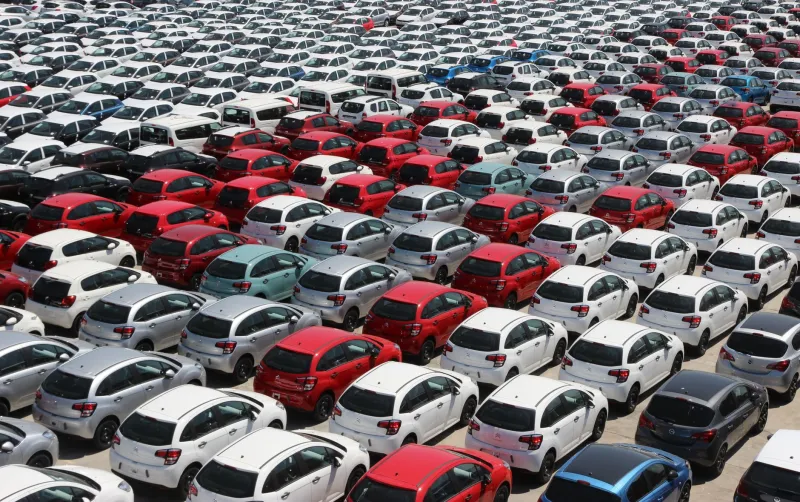
White, silver, and gray dominate the used car market for a reason. They're the colors that move fastest and depreciate slowest across the broadest range of vehicle types. That's not because they're particularly exciting — it's because they're universally inoffensive. A buyer who might have hesitated at an orange car will rarely hesitate at a white one.
Black performs well too, particularly on SUVs, trucks, and luxury vehicles where darker tones carry a premium association. Blue has gained ground in recent years and tends to perform well on pickup trucks and sport-oriented vehicles.
The common thread among high-retention colors is that they appeal to the widest possible pool of buyers. When you're selling a used car — whether to a dealer or a private buyer — you want as many people as possible to be able to picture themselves in it. Neutral colors remove one more potential objection from the equation.
The Colors That Can Cost You
Bold colors are a different story. Yellow, orange, purple, and some shades of green tend to perform poorly on vehicles where those colors don't have a natural audience. A bright yellow sports car might actually hold value reasonably well because buyers seeking that vehicle type often want something expressive. A bright yellow minivan is a very different situation.
Red is interesting because it sits in the middle. It performs decently on sports cars and some trucks but can be a liability on sedans and family vehicles, where buyers tend to prefer something more subdued. The vehicle type and color combination matters as much as the color itself.
Brown and gold, which had minor moments of popularity, tend to depreciate faster than almost anything else in most segments. They're niche enough that the buyer pool is narrow, and a narrow buyer pool means lower offers.
Why Regional and Seasonal Factors Make It More Complicated
Here's where it gets more nuanced. Color preferences aren't uniform across the country. In warmer, sunnier markets like Florida, Arizona, and Southern California, white vehicles are especially popular — partly for aesthetic reasons and partly because lighter colors stay cooler in direct sun. In the Pacific Northwest, where overcast skies are the norm, buyers have shown more tolerance for darker and even more unusual colors.
 Photo: Pacific Northwest, via wallpaper-mania.com
Seasonal timing matters too. Convertibles in bright colors sell better in spring. Trucks in darker tones tend to move well in fall and winter. If you're trading in a car at the "wrong" time of year for its color, you might be leaving money on the table that you'd have captured a few months later.
None of these factors are things most buyers think about at the point of purchase — and that's exactly why the effect is so invisible until trade-in day.
The Practical Reality
None of this means you should pick your car's color based purely on resale projections. Color is a legitimate personal preference, and you're the one who has to look at the vehicle every day for the next several years. If the pearl white doesn't excite you and the deep forest green does, that's a real consideration.
But going in with eyes open is worthwhile. If you're choosing between two colors you like equally, checking which one tends to hold value better in your region and for your vehicle type is a five-minute exercise that could be worth a meaningful amount of money three to five years down the road.
The tools are there. iSeeCars and similar platforms publish annual color depreciation data. Your state's most popular vehicle colors are publicly tracked. And if you're buying a vehicle primarily as a financial decision — leasing, planning a short ownership window, or buying specifically to resell — color deserves a seat at the table alongside mileage and trim level.
The color you barely thought about is the one the next buyer will absolutely notice.