Your Car's Infotainment Screen Has an Expiration Date — And the Clock Started Before You Left the Lot
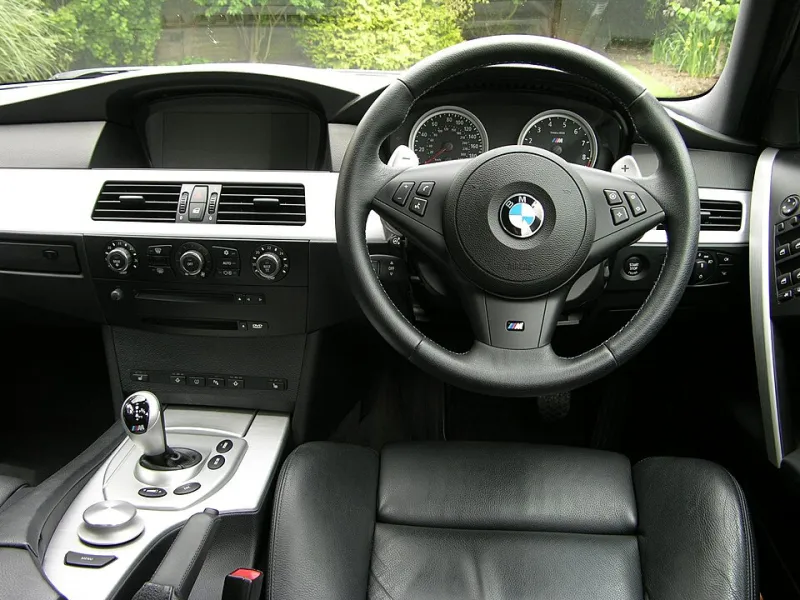
Photo: Cardinator25, CC BY 2.0, via Wikimedia Commons
When you bought your car, that infotainment system was probably one of the selling points. Big screen, wireless CarPlay, built-in navigation, a dozen connectivity features. It felt like you were driving something genuinely modern.
Three years later, that same system might already feel like a relic. And that's not an accident.
How Fast Automotive Tech Actually Moves
Here's something worth understanding about how cars get made: the infotainment system in a vehicle that rolls off the lot today was likely designed and locked in two to four years before you ever sat in front of it. Automotive development cycles are long. By the time a platform goes from concept to production, the tech ecosystem it was designed around has already shifted.
The processor powering your touchscreen? It's the same category of chip found in smartphones from several years ago — not because automakers are cutting corners, but because automotive-grade hardware has to meet durability and temperature standards that consumer electronics don't. Those requirements slow everything down.
The result is that your "new" car's brain is, in a meaningful technical sense, already behind the curve on the day it's sold.
The Software Update Problem
Smartphone operating systems get major updates for five to seven years after release. Your car's infotainment system is lucky to get meaningful software support for three.
This isn't universally true — Tesla's over-the-air update model has genuinely changed expectations in this area, and a handful of other manufacturers are starting to follow. But for the vast majority of vehicles on the road today, software updates are limited, infrequent, and eventually discontinued entirely.
What does that mean practically? It means that the apps baked into your system stop getting updated. Navigation maps fall behind. Voice recognition performance stagnates while the underlying AI technology it's competing against keeps improving. Bluetooth connectivity protocols evolve, and your system can't keep up. Features that worked fine at launch start to feel clunky — not because anything broke, but because everything else moved forward.
Some automakers charge for map updates. Others simply stop providing them after a certain point. And unlike your phone, you can't just download a new operating system.
Wireless CarPlay and Android Auto: The Workaround That's Also Aging
Many drivers sidestep infotainment frustrations by relying almost entirely on Apple CarPlay or Android Auto, which essentially mirrors your phone's interface onto the car's screen. It's a smart workaround — your phone updates regularly, so the experience stays current even when the car's native software doesn't.
But this solution has its own ceiling.
First, not every car supports wireless CarPlay or Android Auto. Wired-only connections are still common on vehicles sold just a few years ago, and that cable dependency becomes a friction point as wireless becomes the expectation everywhere else in your life.
Second, both Apple and Google periodically update their integration protocols. Older infotainment hardware can lose compatibility with newer smartphone features over time — not all at once, but gradually. Functions that once worked cleanly start requiring workarounds, or simply stop working.
Third, and most importantly: the moment you're relying on your phone to make your car's screen functional, you're essentially acknowledging that the car's native technology is already obsolete. You're using one device to compensate for another.
Why Automakers Don't Have Much Incentive to Fix This
This is the part of the story that connects the dots.
A car that feels technologically dated creates a psychological itch. You start noticing the lag when you tap the screen. You get mildly annoyed when the navigation misses a new road. You see an ad for a newer model with a larger display and a faster interface, and something in your brain files that away.
That itch is extremely valuable to an automaker. A customer who feels like their current car is falling behind is a customer who's more receptive to a trade-in conversation. Technology obsolescence has become one of the most effective — and least discussed — drivers of vehicle replacement cycles in the modern market.
This isn't a conspiracy. It's just incentive alignment. Automakers profit when you buy a new car. Keeping your current car's software cutting-edge for a decade works against that interest. So the investment in long-term software support is limited, and the gap between your car's tech and your phone's tech grows a little wider every year.
What This Means If You're Buying Right Now
A few things are worth thinking about before you let a flashy infotainment demo influence your purchase decision.
Ask specifically about the manufacturer's software update policy. How long does the current model receive updates? Is navigation included or billed separately? Does the system support over-the-air updates, or do you need a dealer visit?
Check whether the system supports both wired and wireless smartphone integration, and make sure that works with your current phone before you sign anything.
And consider treating the infotainment system the same way you'd treat any other depreciating component — because that's exactly what it is. The screen that looks impressive in the showroom today is on a depreciation curve of its own, running parallel to but faster than the rest of the vehicle.
Your car's engine could run for 200,000 miles. The software experience wrapped around it might feel dated in 36 months. That's not a flaw in the product — it's a feature of the business model. And knowing that going in puts you in a much better position than finding out three years later.