New Car Break-In Rules Were Written for Engines That No Longer Exist
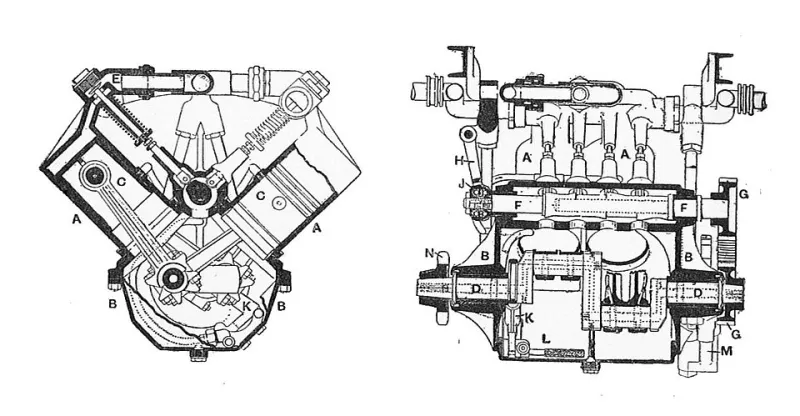
Photo: Andy Dingley (scanner), Public domain, via Wikimedia Commons
The Ritual Every New Car Owner Still Performs
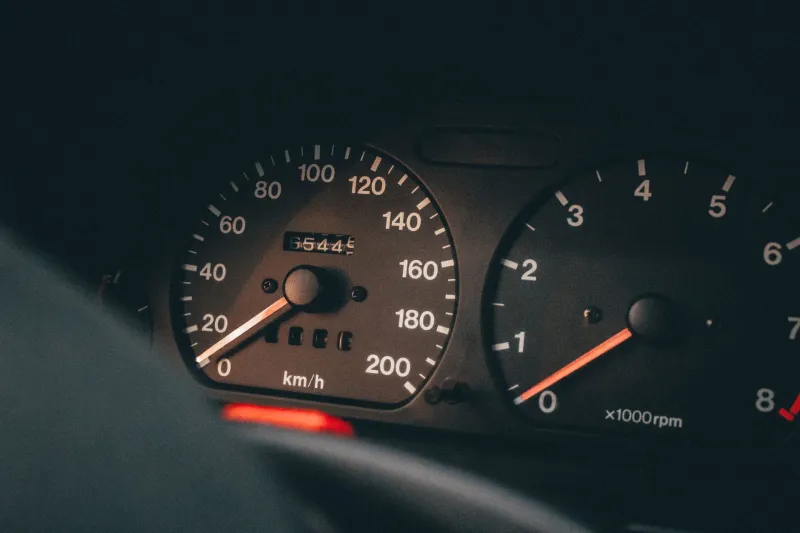
Buy a new car, and somewhere between the financing paperwork and the key handoff, someone will tell you about the break-in period. Keep it under 55 mph for the first 500 miles. Don't rev it past 3,000 RPM. Avoid highway speeds. Let the engine settle in before you push it.
It sounds reasonable. It sounds responsible. And for most of automotive history, it actually was.
The problem is that the manufacturing reality those rules were written for hasn't existed in American showrooms for a long time. The advice persists anyway — passed down from service advisors, embedded in owner's manuals, and repeated by well-meaning friends — because automotive folklore is remarkably hard to update.
Why Break-In Periods Were a Real Thing
To understand why this advice made sense, you have to go back to mid-20th century engine manufacturing. The internal components of an engine — pistons, cylinder walls, piston rings, camshafts, bearings — need to fit together with extraordinary precision. The rings especially need to seat properly against the cylinder walls to create the seal that makes combustion efficient.
Decades ago, machining tolerances were relatively loose by today's standards. Engine components came out of the factory with microscopic surface irregularities. The break-in period existed to let those surfaces wear against each other gradually, smoothing out the high spots and allowing the parts to conform to each other under controlled stress. Push the engine too hard before that process completed, and you risked poor ring seating, increased oil consumption, and reduced long-term performance.
The advice was legitimate. It was grounded in real metallurgy and real manufacturing limitations.
What Changed at the Factory
Modern CNC machining and manufacturing tolerances have transformed what comes off the assembly line. Today's engine components are machined to tolerances measured in microns — fractions of a thousandth of an inch. The surface finish on a modern cylinder wall is so precise that the micro-irregularities that required a gradual break-in process are largely gone before the engine ever leaves the plant.
Beyond the machining itself, modern assembly processes include factory break-in steps that happen before the car reaches a dealer. Many engines are run on test stands during production. Some manufacturers use plateau honing — a specific cylinder wall finishing technique that pre-seats the rings without requiring miles of gentle driving to achieve the same result.
The lubricants have changed too. The oils used in modern engines — including the factory fill oil that comes in a new car — are formulated specifically for the conditions of a contemporary engine. Some manufacturers actually recommend against changing the break-in oil early, because the specific additive package in that factory fill serves a purpose during the initial hours of operation.
So Why Are Dealers Still Saying It?
Owner's manuals are part of the answer. Some manufacturers still include modified break-in language — not because the engineering demands it, but because it's a conservative recommendation that costs nothing to print and creates no liability. "Avoid aggressive acceleration for the first 1,000 miles" is the kind of advice that sounds prudent and generates no complaints regardless of whether the engine actually needs it.
Dealers and service advisors repeat it because it's what they've always said, and because no one has given them a compelling reason to stop. It's become part of the new car ritual, like checking the tire pressure before a road trip. It feels responsible even when the underlying justification has mostly dissolved.
There's also a subtle financial angle. A customer who believes their new car needs careful management in the early miles is a customer who's thinking about their car's maintenance more broadly — and more likely to schedule that first oil change, that first tire rotation, that first multi-point inspection.
The Case That the Old Advice Might Actually Backfire
Here's a wrinkle that doesn't get discussed enough: some engineers and performance-oriented mechanics argue that overly gentle break-in driving on modern engines can actually be counterproductive.
The reasoning goes like this: if you never push the engine to higher loads during the initial miles, the rings may seat against the cylinder walls in a pattern that reflects only low-stress operation. When you eventually drive the car normally — merging onto a highway, passing someone, climbing a grade — the rings encounter loads they weren't conditioned for. Some performance engine builders actually recommend varying throttle inputs and engine loads deliberately during break-in to ensure the rings seat across the full range of operating conditions.
This isn't universally accepted, and it's more relevant to performance applications than daily drivers. But it illustrates that the "always baby it" advice isn't even internally consistent when you examine it closely.
What You Should Actually Do With a New Car
Drive it normally. Avoid sustained maximum RPM for the first few hundred miles if you want to be conservative, but don't obsess over keeping the tachometer below an arbitrary number. Vary your driving — some highway, some city, some gentle acceleration, some moderate acceleration. Follow the manufacturer's recommendations in your specific owner's manual, which will be far less restrictive than the advice you'll hear at the dealership.
Change the oil at the manufacturer's recommended interval. Don't change it early thinking you're doing the engine a favor — you may actually be removing the specific factory-fill formulation before it's done its job.
The Takeaway
Break-in periods weren't invented to deceive anyone. They were a genuine engineering necessity for decades. But the manufacturing world that made them necessary has moved on, and the advice hasn't kept pace. Modern engines leave the factory closer to ready than any engine in automotive history. Treating your new car like a fragile artifact for the first thousand miles is a habit inherited from a different era — and in some cases, it may not even be doing you any favors.