That Expiration Date Stamped on Your Child's Car Seat Is Real — And Most Parents Have Never Looked for It
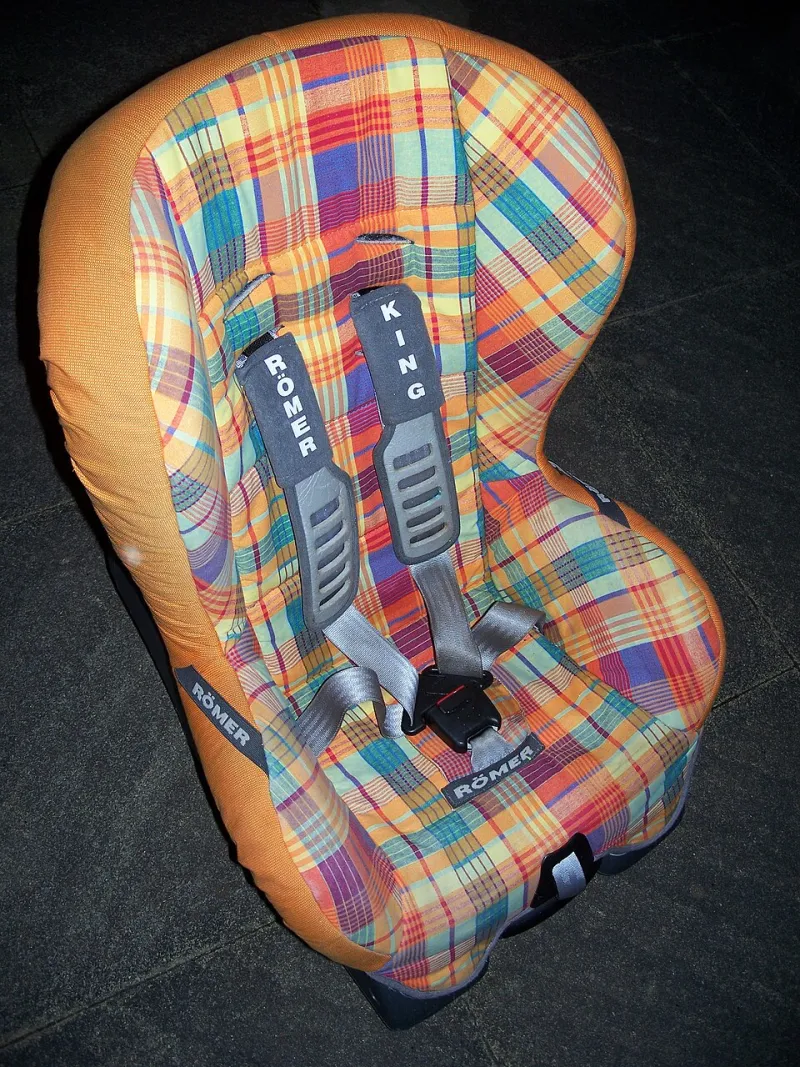
Photo: Cschirp, CC BY-SA 2.5, via Wikimedia Commons
That Expiration Date Stamped on Your Child's Car Seat Is Real — And Most Parents Have Never Looked for It
If you've ever bought a car seat, you probably focused on the weight limits, the installation instructions, and whether it would fit in your back seat without crushing the knees of whoever sits in front. What you almost certainly didn't do was hunt around the plastic shell for a stamped manufacture date and calculate when the seat officially expires.
Most parents have no idea car seats expire at all. And yet every major manufacturer builds an expiration date right into the product — typically somewhere between six and ten years from the date it was made. That date isn't a vague suggestion. It's a hard cutoff that the manufacturer, and most child safety advocates, take seriously.
So what actually happens to a car seat as it ages? And why should you care if the seat looks perfectly fine sitting in your garage?
The Materials Break Down in Ways You Can't See
A car seat isn't just a chunk of molded plastic. It's a carefully engineered combination of materials — hard polypropylene shells, energy-absorbing foam, nylon or polyester harness webbing, and metal hardware — each of which ages at its own rate.
Polypropylene, the plastic used in most seat shells, is sensitive to UV exposure and temperature cycling. Every summer your car bakes in a parking lot, and every winter it sits in a cold garage, the plastic goes through expansion and contraction cycles that gradually introduce micro-fractures. You won't see them with the naked eye, but they affect the structural integrity of the seat in a crash — which is exactly the moment you need it to perform perfectly.
The foam padding follows a similar arc. Over years of use, foam compresses and loses its ability to absorb impact energy the way it was designed to. A seat that looks cushioned might not be providing the same protection it did when it was new.
Harness webbing is another concern. The straps that hold your child in place are made from synthetic fibers that degrade with repeated washing, UV exposure, and the general wear of being buckled and unbuckled thousands of times. A harness that appears intact can have reduced tensile strength that only reveals itself under crash forces.
Why the Expiration Date Exists
Manufacturers set expiration timelines based on material testing, but there's another practical reason those dates exist: the standards themselves change. Car seat safety regulations are updated periodically as crash science improves and new testing protocols are introduced. A seat manufactured ten years ago was built to meet the standards of ten years ago. Current seats are built to current standards, which are generally more stringent.
This isn't manufacturers being alarmist to sell more product. It's the same logic that applies to helmets, fire extinguishers, and safety harnesses in industrial settings. Safety equipment has a service life, and exceeding it introduces risk that isn't always visible.
The Garage Sale Problem
Here's where things get genuinely complicated for a lot of families: car seats are expensive. A quality convertible seat can run $200 to $400, and it's completely understandable that parents look for ways to save money wherever they can. Secondhand car seats show up constantly at garage sales, on Facebook Marketplace, and handed down between siblings or cousins.
The problem is that a used seat comes with a history you can't fully verify. You don't know if it was in a crash. You don't know how it was stored. You don't know if it's been recalled — and car seat recalls happen more often than most people realize. And unless the previous owner can hand you the original documentation, you may not even know exactly how old it is or whether it's past its expiration date.
Child passenger safety technicians — the certified specialists who help parents install seats correctly — consistently advise against buying used seats from strangers for exactly these reasons. The savings aren't worth the uncertainty when the stakes are a child's safety in a crash.
Where to Find the Date on Your Seat
If you're not sure whether your current seat has expired, it's worth checking right now. The manufacture date is usually stamped or molded into the plastic on the bottom or back of the seat shell. The expiration date — or the lifespan from manufacture — is typically listed on a sticker in the same area, or in the owner's manual.
Different brands handle this differently. Some stamp an explicit "Do not use after" date. Others list a manufacture date and a lifespan ("This seat expires six years from manufacture"), which means you do the math yourself. Either way, the information is there — most parents just never think to look for it.
What This Means Practically
None of this means you need to panic if your seat is a year or two old. A well-maintained seat used within its lifespan, installed correctly, is doing exactly what it's supposed to do. The takeaway here isn't fear — it's awareness.
Check the date. Know when your seat expires. If you're shopping secondhand, buy from someone you trust who can give you the full history, or consider buying new and looking for sales, retailer coupons, or store-brand options that meet the same federal safety standards as premium brands.
The expiration date on a car seat isn't fine print. It's one of the few pieces of safety information on the product that manufacturers put there specifically because they want you to pay attention to it. That's worth taking at face value.