The 'Safest Seat in the Car' Rule Has a Lot More Exceptions Than Anyone Told You
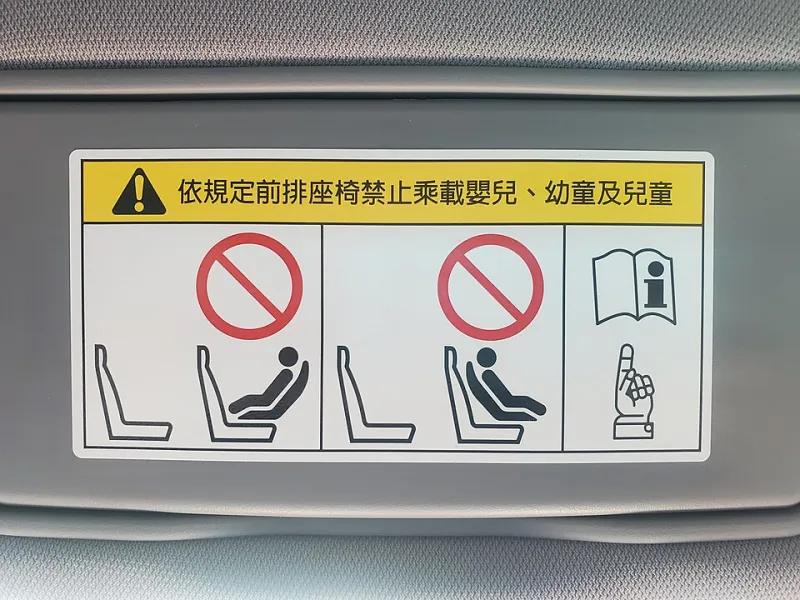
Photo: RGZ95, CC BY-SA 4.0, via Wikimedia Commons
The 'Safest Seat in the Car' Rule Has a Lot More Exceptions Than Anyone Told You
Ask almost any parent where the safest place to put a child in a car is, and you'll hear the same answer: the middle of the back seat. It's the kind of advice that gets passed down so confidently, and repeated so often, that it starts to feel like a law of physics rather than a guideline with significant caveats.
The real answer is more nuanced, more interesting, and honestly more useful — but it requires understanding what crash research actually measures and what it doesn't.
Where the Rule Came From
The logic behind the rear center recommendation isn't wrong, exactly. It's just incomplete.
In a frontal crash — which is the most common type of serious collision — the rear center seat offers genuine advantages. It's the farthest point from the front of the vehicle, which means it's the most removed from the primary zone of impact and deformation. It's also equidistant from both sides of the car, which in a side-impact scenario means it has more distance between the occupant and the door than either rear outboard seat.
A 2006 study published in the journal Injury Prevention found that children seated in the center rear position had a 43 percent lower risk of injury compared to those in other seats. That study got a lot of attention, and it shaped the advice parents have been repeating ever since.
But that research was conducted before a significant shift in how cars are designed and crash-tested — and before side-impact collisions became a more central focus of automotive safety engineering.
The Side-Impact Problem
Here's where the simple rule starts to fall apart. Side-impact crashes — the kind where another vehicle runs a red light and hits you broadside — are among the most dangerous collisions because the door offers very little crumple zone compared to the front of a vehicle. Modern cars have gotten dramatically better at managing side impacts through reinforced door structures, side curtain airbags, and torso airbags, but those safety systems are typically positioned near the outboard seats, not the center.
Side curtain airbags, for example, deploy along the windows and are designed to protect the head of an occupant seated next to the glass. A child seated in the center rear position is farther from that protection. In a severe side-impact crash on the near side, the center seat occupant may actually be at a disadvantage compared to someone seated on the far outboard side — away from the impact — who benefits from the vehicle's side-impact engineering.
This doesn't mean the center seat is suddenly dangerous. It means the safety calculation shifts depending on where the crash force is coming from, and you don't get to choose that in advance.
The Seat Belt Problem Nobody Talks About
There's another issue with the rear center position that gets very little attention: the quality of the restraint system.
Many vehicles — especially older ones — equip the rear center seat with a lap belt only, rather than the three-point lap-and-shoulder belt found at the outboard positions. A lap-only belt is a significantly inferior restraint in a frontal crash. It doesn't prevent the upper body from pitching forward, which can cause serious internal injuries and what's sometimes called "seat belt syndrome" — compression injury to the abdomen.
If your vehicle's rear center seat has only a lap belt, the safety advantage of that position can be partially or entirely offset by the inferior restraint. In that scenario, a rear outboard seat with a proper three-point belt may actually be the better choice for an adult passenger.
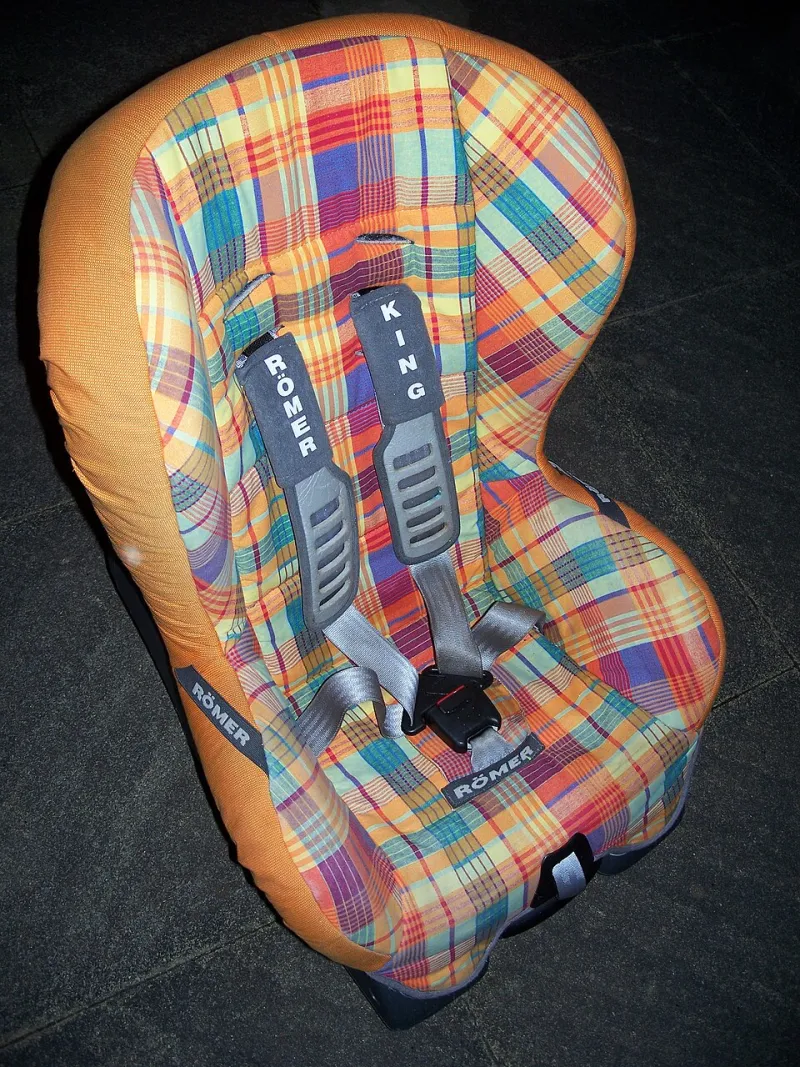
For child seats, the calculus is different — a properly installed forward-facing or rear-facing child seat uses the vehicle belt primarily as an anchor and relies on its own harness system, which somewhat reduces the lap-belt concern. But installation in a center seat can also be more difficult due to seat contour and anchor point placement, and a poorly installed seat is worse than a well-installed seat in any position.
What Modern Crash Testing Actually Tells Us
The National Highway Traffic Safety Administration (NHTSA) and the Insurance Institute for Highway Safety (IIHS) conduct extensive crash testing, but neither organization tests every seating position in every vehicle. Most ratings are based on the driver's seat and front passenger seat. Rear seat safety is a growing area of focus — the IIHS added rear seat protection to its evaluation criteria relatively recently — but we still have less systematic data on rear center seat performance across vehicle models than most people assume.
 Photo: National Highway Traffic Safety Administration, via www.fedsapparel.com
What research does consistently show is that vehicle-to-vehicle variation matters enormously. The rear center seat in one SUV may perform very differently in a side-impact test than the rear center seat in a sedan or a minivan. There is no universal "safest seat" that applies across all vehicles and all crash types.
A More Honest Takeaway
None of this means you should stop putting kids in the center rear seat. For many families, in many vehicles, it remains a reasonable choice — particularly for rear-facing infant seats where the distance from side impacts is a genuine benefit and installation works well.
But the blanket confidence with which this advice gets repeated deserves some pushback. The right approach is to check whether your center rear seat has a three-point belt, confirm that your child seat can be installed securely in that position, and recognize that the "always safest" framing was always a simplification of more complicated research.
Car safety rarely reduces to a single universal rule. The vehicles are too different, the crashes are too varied, and the equipment matters too much for any one answer to cover every situation. Knowing that is actually more useful than the rule itself.