That CPO Sticker on the Windshield Is a Sales Tool, Not a Safety Guarantee
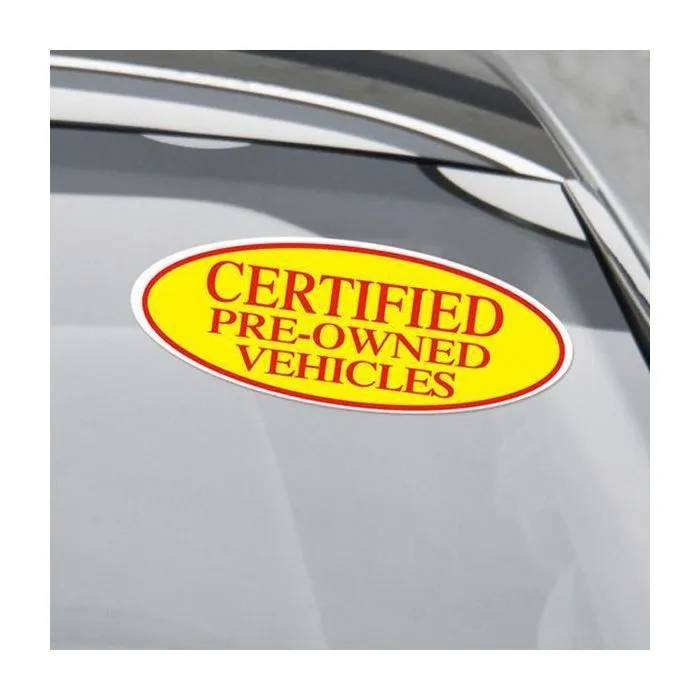
Photo: used car dealership certified pre-owned window sticker, via www.gppinc.com
That CPO Sticker on the Windshield Is a Sales Tool, Not a Sales Promise
Walk into any franchise dealership today and you'll see used cars wearing that familiar badge — Certified Pre-Owned. It's positioned carefully, usually near the price sticker, and it carries a quiet implication: this car has been vetted, inspected, and blessed by people who know what they're doing. You're not just buying a used car. You're buying a used car with standards.
Here's the part they don't advertise: the standards are written by the manufacturer — the same company that wants to sell you the car.
What 'Certified' Actually Certifies
There's no federal agency, independent body, or third-party watchdog that defines what a Certified Pre-Owned vehicle has to be. The label is a marketing designation, not a regulated consumer protection standard. Each automaker writes its own CPO rulebook, and those rulebooks are not created equal.
Toyota's CPO program uses a 160-point inspection. BMW uses 360 points. Some brands use fewer than 100. But here's the thing — the number of inspection points is almost meaningless without knowing what those points actually cover. Checking that the cupholders aren't cracked counts as an inspection point. So does confirming the dome light works. Impressive-sounding checklists can be padded with observations that have nothing to do with whether the car is mechanically sound.
More importantly, most CPO programs allow dealers to certify vehicles after completing whatever repairs are needed to pass the checklist. A car that failed the inspection gets fixed — sometimes thoroughly, sometimes minimally — and then gets the badge. The badge doesn't tell you the car sailed through cleanly. It tells you the car was made to pass.
The Warranty Is the Real Product
If you strip away the marketing, what you're mostly paying for with a CPO vehicle is an extended warranty. That's not nothing — warranties have real value. But it's worth understanding what the warranty actually covers and, more importantly, what it doesn't.
CPO warranties are typically powertrain-focused, meaning they cover the engine and transmission. Electrical systems, infotainment components, suspension wear, and trim items are often excluded or covered only partially. Wear items — brakes, tires, belts — are almost universally excluded, even if those components were close to the end of their service life when the car was certified.
Read the fine print and you'll also find mileage caps, deductibles, and clauses that can void coverage if you skip a service interval or use a non-dealer repair shop. The warranty protects you in specific, narrow circumstances. It does not protect you from everything a used car might throw at you.
Why Independent Mechanics Get Skeptical
Talk to an independent mechanic about CPO vehicles and you'll get a reaction that might surprise you. Many of them are lukewarm on the whole concept — not because the cars are necessarily bad, but because buyers come in with expectations that don't match reality.
The inspection that certified the car was performed by a technician working for the dealership, often under time pressure, with a financial incentive to move inventory. That's not a conspiracy — it's just how the system works. Pre-purchase inspections done by truly independent mechanics regularly turn up issues that CPO inspections missed. Worn suspension components. Developing oil leaks. Tires that technically pass a visual check but are near the end of their useful life.
Some mechanics also note that CPO pricing builds in a premium — sometimes $1,000 to $3,000 more than a comparable non-certified used car — that doesn't always reflect the actual condition of the vehicle. You're paying for the badge and the warranty, not necessarily for a better car.
The Liability Math
Here's the dynamic worth understanding: CPO programs are largely designed to reduce dealer liability, not to maximize buyer protection. When something goes wrong with a CPO vehicle shortly after purchase, the warranty creates a structured process for handling complaints. That process protects the dealer from open-ended legal exposure. It gives buyers a defined path — file a claim, pay the deductible, get the covered repair — rather than a dispute.
That's useful. But it's different from the car actually being in excellent condition. The certification process creates documentation that the car was inspected and repaired to a standard. That documentation is primarily valuable to the dealer.
What to Actually Do With This Information
None of this means CPO vehicles are a bad idea. A well-run CPO program from a reputable manufacturer, combined with a solid warranty, can genuinely be worth the premium — especially for buyers who want predictability and aren't comfortable evaluating a used car on their own.
But the smart move is to treat the CPO badge as a starting point, not a conclusion. Before you pay the CPO premium, ask the dealer for the actual inspection checklist — the completed one, with checkmarks, not the blank template. Ask specifically what was repaired or replaced during the certification process. And seriously consider paying $100–$150 for an independent pre-purchase inspection at a shop of your choosing.
If the dealer resists that last request, that tells you something more useful than any badge ever could.
The bottom line: Certified Pre-Owned is a real program with real value — but it's a marketing product first and a consumer protection mechanism second. Knowing the difference is how you decide whether the premium is actually worth it.