Your Dashboard Fuel Economy Number Is a Flattering Lie Your Car Tells Itself
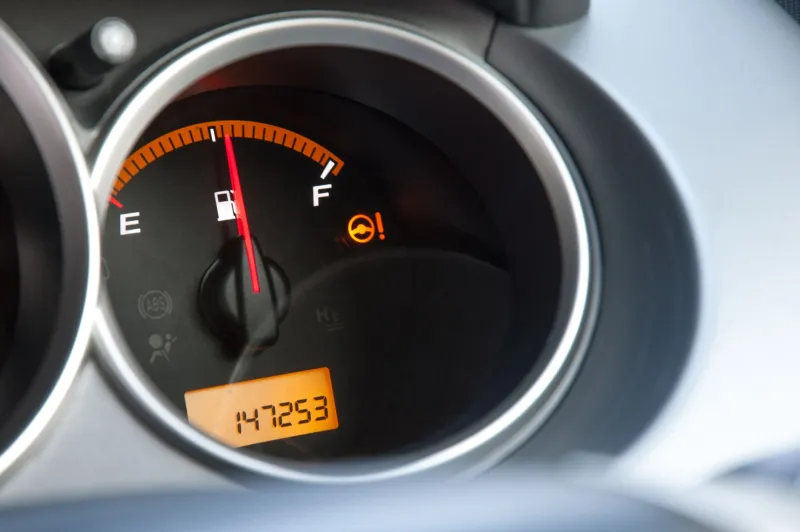
There's something quietly satisfying about glancing down at your dashboard and seeing a solid fuel economy number staring back at you. Maybe you eased off the gas on the highway, or coasted down a long hill, and suddenly your display reads 38 MPG. You feel like you've cracked the code.
Except you probably haven't. And your car is partly to blame for making you think you did.
What Most Drivers Assume Is Happening
The natural assumption is that the fuel economy display on your instrument cluster is giving you a live, accurate picture of how efficiently your car is running. Fill up the tank, reset the trip meter, drive around for a week, and that number reflects exactly how your engine performed over every mile you drove.
It sounds reasonable. Your car has a computer. The computer tracks fuel. The math should be simple.
But the number your dashboard shows you isn't a straight calculation. It's a constructed estimate built on rolling averages, sensor sampling delays, and some deliberate smoothing that the engineers built in — not to deceive you, but to keep the display from flickering like a broken slot machine. The side effect, though, is a readout that consistently flatters your real-world performance.
The Rolling Average Problem
Most onboard fuel economy displays calculate their numbers using a rolling average — meaning the system is constantly blending recent driving data with older data to produce a stable figure. The window that average covers varies by manufacturer and can sometimes span dozens of miles worth of driving.
What that means in practice: if you drove aggressively through city traffic this morning and then settled into a smooth highway cruise this afternoon, your current display might still be reflecting some of that earlier inefficiency — or, more commonly, your efficient highway stretch might be softening the impact of some truly terrible stop-and-go miles you drove two days ago.
The number never fully resets. It's always carrying ghosts of past driving with it.
Why the Display Lags Behind Reality
Beyond the rolling average issue, there's a mechanical reality that creates additional lag. Your car's computer calculates fuel consumption by measuring the flow of fuel through injectors and comparing it against airflow and engine load data. But those sensors don't sample instantaneously — they work in cycles, and the display update rate is intentionally slowed down so the number doesn't jump around every half-second.
The result is that when you accelerate hard, your real-time fuel consumption spikes dramatically, but the display takes a moment to catch up. When you coast and consumption drops, the display is again slow to reflect it. In both cases, the smoothing tends to present a rosier picture than what's actually happening inside your engine at any given moment.
Some manufacturers have made this smoothing more aggressive over the years — partly because customers complained that jumpy readouts were distracting, and partly because a stable, higher-looking number makes drivers feel good about their vehicle.
The Fill-Up Reset Nobody Talks About
Here's where things get especially interesting. When you fill up your tank and reset your trip odometer, you're also resetting the fuel economy calculation — but not the underlying assumptions the computer uses to make that calculation.
Your car doesn't actually measure how much fuel left your tank. It estimates consumption based on injector pulse width and engine operating data. And those estimates carry their own built-in error margin. Over a full tank, small miscalculations in either direction can compound into a meaningful difference between what your dashboard claims and what your actual miles-per-gallon works out to when you do the math at the pump.
The only way to get a genuinely accurate fuel economy figure is the old-fashioned method: fill your tank completely, reset your trip odometer, drive until you need fuel again, fill completely a second time, and divide the miles driven by the gallons it took to refill. That's real math. The dashboard number is a polished estimate.
Why the Misconception Persists
Automakers have invested heavily in making instrument clusters feel authoritative. Big digital displays, decimal-point precision, real-time graphs — all of it creates an impression of scientific accuracy that the underlying data doesn't quite support.
There's also a psychological element at play. Drivers naturally adjust their behavior when they watch the readout, and that behavior change can genuinely improve efficiency. So the display is useful as a behavioral tool even when it's not perfectly accurate as a measurement tool. The problem is that most drivers don't know the difference, and they end up trusting a number that was never designed to be taken as ground truth.
Add in the fact that EPA fuel economy ratings — the numbers on the window sticker — were also never measured on actual roads, and you've got a situation where almost every official fuel economy figure a driver encounters is built on some layer of estimation or controlled-condition testing.
What the Number Is Actually Good For
None of this means your fuel economy display is useless. It's genuinely helpful for spotting trends. If your average has been sitting around 30 MPG for months and it suddenly drops to 24 MPG, that's a meaningful signal — something has changed, and it's worth investigating.
The display also works well as a real-time feedback tool for learning more efficient driving habits. Watching how aggressively accelerating or maintaining highway speed affects the readout can teach you a lot about where your fuel actually goes.
Just don't mistake it for a precision instrument. It was built to be useful and stable, not exact.
The Actual Takeaway
Your dashboard fuel economy number is a smoothed, averaged, slightly optimistic estimate — and that's by design. It lags behind reality, blends old data with new, and can't directly measure the fuel your engine actually consumed. The most accurate way to know your real-world MPG is still to do the math yourself at the pump. Your car's computer is a useful co-pilot, but it's been quietly rounding up in its favor the whole time.