The Rust Hiding Underneath Your Car Is the Only Kind That Actually Matters
Walk around a used car on a dealer lot and the first thing most buyers do is look for rust. They check the door bottoms, scan the wheel arches, maybe crouch down to peek at the rocker panels. If everything looks clean, they feel reassured. If they spot a bubbling fender, they negotiate hard or walk away.
That instinct isn't wrong — but it's incomplete in a way that can cost buyers thousands of dollars and, in serious cases, put them in genuine danger.
The rust that ruins a car doesn't usually live where you can see it.
Surface Rust vs. Structural Rust: Not the Same Problem
There's a meaningful difference between the rust that appears on body panels and the rust that develops on the structural components underneath a vehicle. Most drivers treat them as variations of the same issue. They're not.
Surface rust — the kind that shows up on door edges, trunk lids, fender lips, and hood seams — is largely cosmetic. It looks bad and will get worse if ignored, but it doesn't affect how the car handles, stops, or holds together in a crash. A skilled body shop can address surface rust, and it generally doesn't make a vehicle unsafe to drive.
Structural rust is a completely different category. This is corrosion that attacks the frame rails, subframe mounting points, floor pan, suspension attachment points, and unibody welds — the skeleton that holds everything else together. When these areas corrode significantly, the car's structural integrity is compromised. It can't absorb crash energy the way it was engineered to. Suspension geometry shifts. In severe cases, components can separate from the body entirely while the car is moving.
And almost none of it is visible from a normal walkaround.
Why Nobody Checks the Right Places
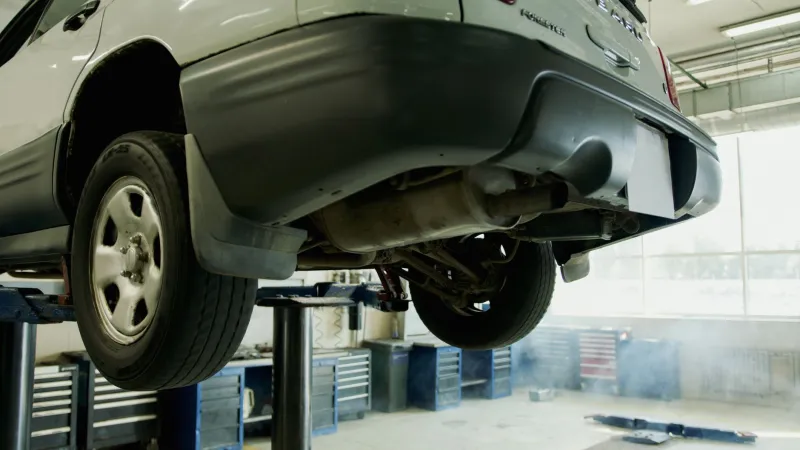
The reason hidden structural rust gets missed so consistently comes down to access. Inspecting frame rails, subframe mounting points, and suspension pickup points properly requires getting the vehicle up on a lift and spending time underneath it with a flashlight and something to probe corroded areas.
Most used car transactions don't involve that kind of inspection. A dealer lot test drive doesn't include it. A casual pre-purchase inspection by a friend who knows cars doesn't include it. Even a surprising number of professional mechanics doing a quick pre-purchase check focus primarily on the engine bay, the tires, and a visual scan underneath that doesn't catch everything.
The areas that matter most are often covered in road grime, undercoating, and years of accumulated debris — which means even when someone does look, the worst corrosion can be hiding behind a layer of crud that looks perfectly normal.
The Road Salt Geography Problem
This issue is dramatically more serious in states that use road salt heavily during winter. The upper Midwest, the Northeast, and parts of the mid-Atlantic region see far more structural rust problems than the Sun Belt states — and buyers from warmer climates sometimes don't fully appreciate how different a ten-year-old car from Minnesota is from a ten-year-old car from Texas.
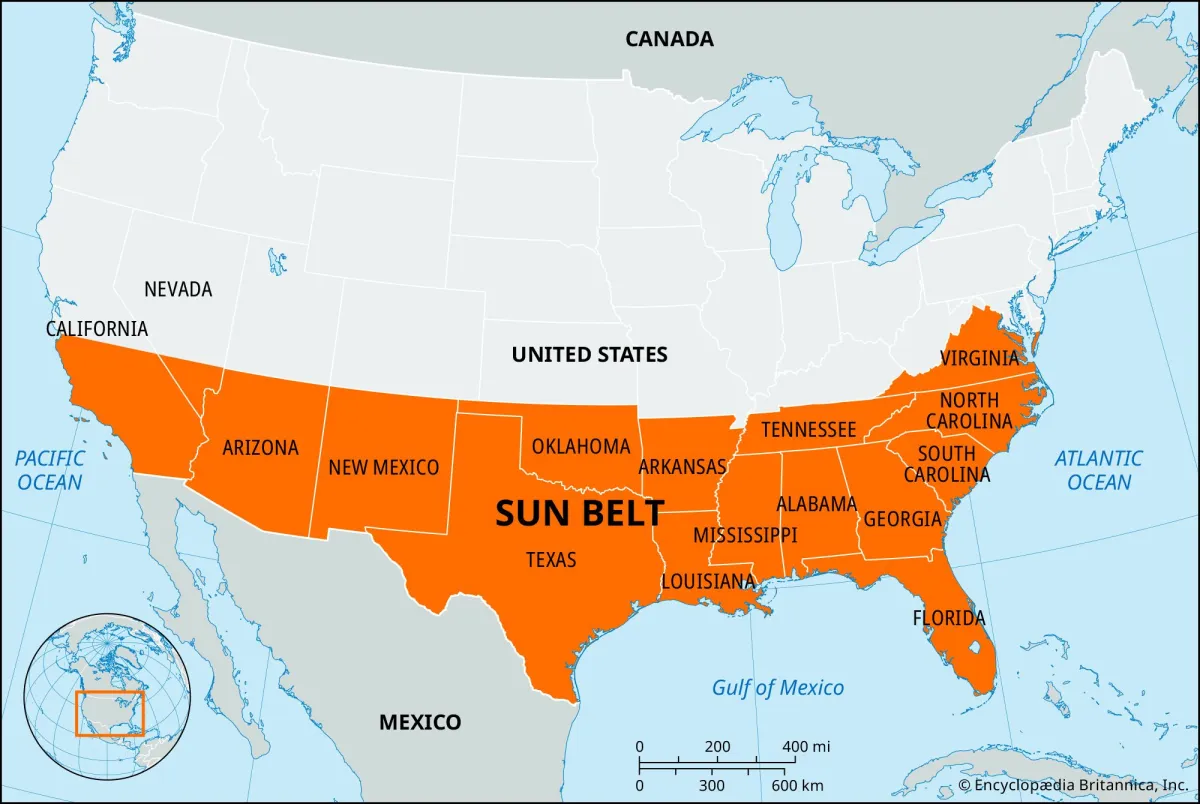 Photo: the Sun Belt, via cdn.britannica.com
 Photo: the Northeast, via printablemapofusa.com
 Photo: the Midwest, via cdn.britannica.com
Salt accelerates corrosion by creating an electrochemical environment that attacks bare metal aggressively. It gets sprayed up into every crevice underneath the car during winter driving, and it stays there. Frame rails on vehicles from heavy-salt regions can be severely compromised at 100,000 miles while the rest of the car looks and runs fine.
This is why used car buyers in salty states who seek out vehicles from the South or Southwest are often making a genuinely smart move — not just chasing aesthetics, but avoiding a category of damage that can't be reversed.
What Actually Happens When Structural Rust Gets Bad
The failure modes aren't always dramatic. Sometimes structural rust reveals itself gradually — a new squeak or creak over bumps, steering that feels slightly vague, a door that doesn't quite align the way it used to. These can all be symptoms of a subframe or unibody that's losing its rigidity.
In more advanced cases, the problems become acute. Suspension components can pull away from their mounting points. In extreme situations — and this is documented, not hypothetical — frame rails on heavily corroded trucks and SUVs have separated during normal driving. Mechanics who work in rust-belt states have seen vehicles come in where critical structural points are essentially held together by undercoating and habit.
Insurers and vehicle inspectors who do thorough structural evaluations sometimes total cars that look completely presentable from the outside, because what's underneath makes repair economically impossible.
How to Actually Check Before You Buy
The most important step any used car buyer can take is insisting on a pre-purchase inspection at an independent shop — not a dealer-affiliated service center — where the car goes up on a lift and a mechanic specifically looks at the underbody with corrosion in mind.
When you're underneath the car yourself or watching an inspection, the areas that deserve the closest attention are the frame rails running front to back, the subframe mounting points where the engine cradle or rear subframe bolts to the unibody, the floor pan for soft spots or holes, and the areas around suspension mounting points where metal fatigue from rust combines with the stress of repeated loading.
A probe — even something as simple as a screwdriver — is more revealing than eyes alone. Solid steel feels solid. Heavily corroded steel that looks intact can crumble under light pressure. Any inspector worth hiring knows this technique.
Also worth checking: the vehicle history for states of registration. A car that spent its first eight years in Michigan or Ohio and its last two in Arizona didn't shed its rust history when it crossed state lines.
The Takeaway
The rust buyers worry about is usually the rust that matters least. Door bubbles and fender blemishes are fixable problems. Corroded frame rails and crumbling subframe mounting points are not — at least not economically. Before buying any used vehicle with meaningful age on it, get it on a lift and have someone who knows what they're looking for spend real time underneath it. The few hundred dollars that inspection costs is the cheapest insurance you can buy.