The Number Under Your Hood That Predicts Engine Death Better Than Your Odometer
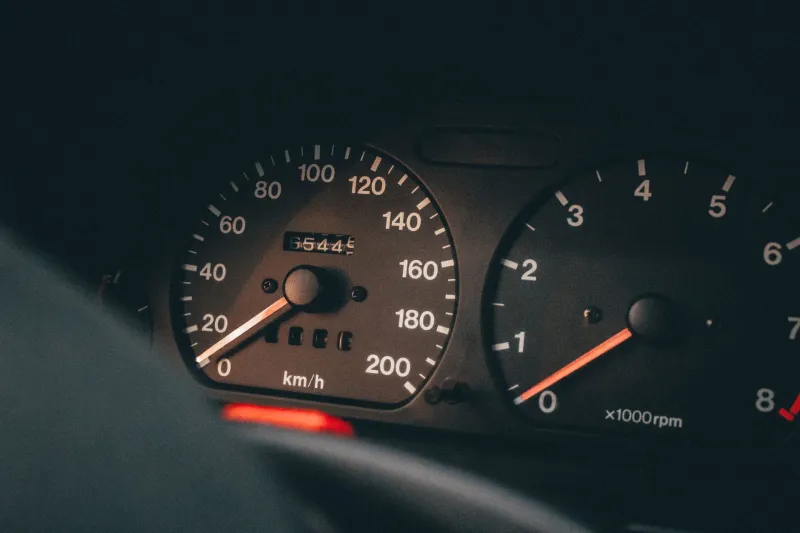
When someone mentions they're shopping for a used car, the first question out of almost everyone's mouth is the same: How many miles does it have? It's practically a reflex. We've been trained since our first car purchase to treat the odometer like a countdown clock. The lower the number, the more life left. Simple.
Except it's not that simple. And if you've ever bought a low-mileage car that turned into a money pit, or driven a high-mileage vehicle that just kept going, you've probably sensed something was off with that logic — even if you couldn't explain why.
The answer is engine hours. And once you understand what that number actually means, you'll never look at a used car the same way.
Miles Tell You How Far. Hours Tell You How Hard.
Think about what a mile actually measures: distance. It says nothing about what your engine was doing to cover that distance. A mile on the interstate at 65 mph is a completely different mechanical experience than a mile crawling through rush-hour traffic in downtown Chicago.
On the highway, your engine settles into a steady, efficient rhythm. Combustion is consistent, oil pressure stabilizes, temperatures stay in a predictable range, and components experience gradual, manageable stress. Cover 120,000 miles mostly that way, and your engine has had a relatively comfortable life.
In stop-and-go city driving, the story changes dramatically. Every time you brake from 30 mph and then accelerate back up, your engine surges through a stress cycle. Oil doesn't circulate as efficiently at low speeds. Temperature fluctuates more frequently. The starter motor fires more often. Fuel burns less cleanly at low throttle. A car that's spent most of its life in urban gridlock has experienced far more of those cycles per mile than a highway commuter — meaning it's genuinely older in mechanical terms, regardless of what the odometer says.
Engine hours capture this reality in a way mileage simply cannot.
Why Mechanics Have Known This for Years
This isn't a new concept. Commercial fleet operators — trucking companies, delivery services, municipal vehicle programs — have tracked engine hours alongside mileage for decades because they know the two numbers together paint a far more accurate picture of maintenance needs and remaining life.
Heavy equipment like bulldozers and generators is sold almost entirely on engine hours rather than any distance metric, because distance is irrelevant when a machine sits in one place running under load. The same underlying logic applies to your car, just in a less extreme way.
Mechanics who work on high-volume used vehicles will often tell you they can feel the difference between a 70,000-mile highway car and a 70,000-mile city car the moment they get under the hood. The city car typically shows more carbon buildup, more wear on cylinder walls, more fatigue on the cooling system, and more strain evidence on the transmission — all of which the odometer cheerfully ignored.
The Math That Changes Everything
Here's a useful way to visualize it. A driver who commutes 15,000 miles per year on the interstate at an average speed of around 55 mph is logging roughly 270 engine hours annually. A city driver covering the same 15,000 miles at an average speed of maybe 20 mph — accounting for constant stopping — is logging closer to 750 engine hours per year.
Same mileage. Nearly three times the engine hours. Three times the wear cycles. Three times the heat events. Three times the oil stress.
After five years, the highway driver has about 1,350 engine hours. The city driver is sitting at roughly 3,750. Their odometers read identically. Their engines do not.
Can You Actually Check Engine Hours on a Regular Car?
This is where things get a little frustrating. Most consumer passenger vehicles don't display engine hours in any obvious way. It's not on your dashboard, it's not in your owner's manual, and your service advisor has probably never mentioned it.
However, engine hour data is often stored in your car's ECU — the onboard computer — and can be read with an OBD-II diagnostic scanner, which is the same tool a mechanic plugs in to read trouble codes. Some advanced scanners and apps can pull this data if you know where to look. It varies by make, model, and year, so it's not universal, but it's more accessible than most drivers realize.
For used car buyers, this is worth asking about explicitly, especially if you're purchasing from a dealer with diagnostic equipment. A car with 80,000 miles and 1,200 engine hours is a very different purchase than one with 80,000 miles and 4,500 engine hours.
What This Means for How You Think About Your Own Car
If you live in a city or spend a meaningful chunk of your commute in stop-and-go conditions, your maintenance intervals probably deserve more scrutiny than the sticker on your windshield suggests. Oil change recommendations are typically calibrated around average driving conditions — but your conditions might not be average.
Many automakers actually acknowledge this. If you look closely at your owner's manual, you'll often find two maintenance schedules: one for "normal" driving and one for "severe" driving, which typically includes frequent short trips, heavy city traffic, and lots of idling. City driving almost always qualifies as severe. Most drivers follow the normal schedule anyway because nobody told them otherwise.
The mileage number on your odometer will always be there, staring at you from every listing and every conversation. It's not useless — it still matters. But it's telling you one part of a more complicated story. Engine hours fill in the rest.
Next time someone brags about buying a low-mileage used car from a city, it might be worth asking a follow-up question they've probably never considered.