That Open Recall Notice Could Quietly Kill Your Car Sale — Here's What to Check Before It's Too Late
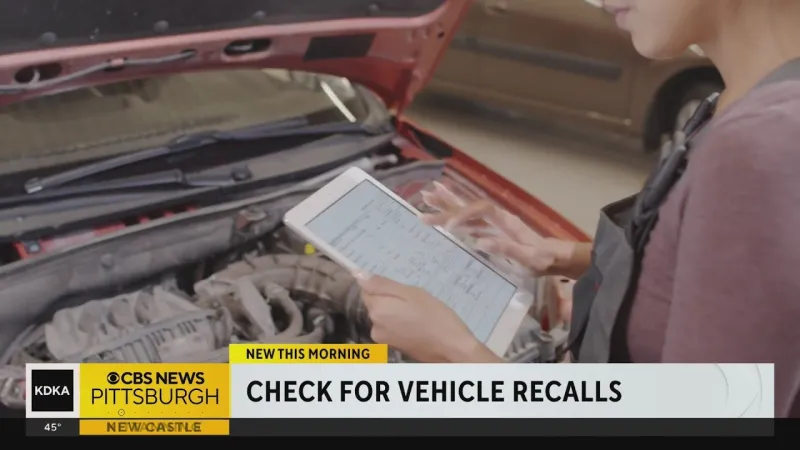
Photo: car recall notice paperwork glove box vehicle VIN check, via i.ytimg.com
That Open Recall Notice Could Quietly Kill Your Car Sale — Here's What to Check Before It's Too Late
Somewhere in the United States right now, a driver is listing their car on a private sale platform, pricing it fairly, writing up an honest description — and completely unaware that their vehicle is carrying an open federal safety recall that could complicate the entire transaction. Maybe even legally block it depending on where they live.
This isn't a rare edge case. According to NHTSA data, at any given time tens of millions of registered vehicles in the US have unresolved recalls. Some of those recalls have been open for years. The owners either never got the notice, ignored it assuming it wasn't serious, or simply forgot. And in a private sale, that detail can become a real problem at exactly the wrong moment.
What an Open Recall Actually Means
A recall happens when a manufacturer — or NHTSA itself — determines that a vehicle or component has a safety defect or doesn't meet federal safety standards. The manufacturer is required to notify owners and fix the problem at no cost. Simple enough in theory.
In practice, recall completion rates in the US hover around 70–75% on average, and for older vehicles they drop significantly lower. That means roughly one in four recalled vehicles never gets the fix. The reasons vary: owners move and miss the mailed notice, people assume the issue doesn't apply to their specific vehicle, or the problem seems minor enough to ignore. Some recalls get announced and then sit in backlog while parts are sourced, leaving owners in limbo for months.
The recall doesn't disappear just because you stopped thinking about it. It stays attached to the VIN — the vehicle identification number — and follows the car through every ownership transfer.
The Part Where It Gets Complicated for Sellers
Here's where the assumption breaks down. Many private sellers believe that as long as they disclose what they know, they've done their part. But several states have passed or proposed legislation that creates liability exposure for knowingly selling a vehicle with an open safety recall. California has been particularly active in this space. Federal law already prohibits dealers from selling new vehicles with open recalls, and the rules around used vehicle sales — both dealer and private — have been tightening.
Even outside of direct legal prohibition, an open recall discovered mid-transaction can kill a deal entirely. A savvy buyer who runs a VIN check — and increasingly, buyers do — will see the open recall flagged immediately. Some buyers will walk. Others will use it as negotiating leverage to knock hundreds or thousands off the price. Either way, it's a variable you didn't need to introduce.
The scenario gets more ironic when you consider certified pre-owned vehicles. CPO programs are marketed as a thorough vetting process — the implication being that anything problematic has been caught and addressed. But investigations by consumer advocacy groups have repeatedly found CPO vehicles sold with open recalls still attached. The certification process and the recall process run on separate tracks and don't automatically cross-reference each other. Buyers who assumed CPO status meant recall-free were often wrong.
Why So Many Owners Never Know
Recall notices are mailed to the registered owner on file with the DMV. If you bought a used car and the previous owner never updated the registration, the notice went to them. If you moved and didn't update your address, it went to your old house. If the recall was issued years before you purchased the vehicle, it may have technically been the prior owner's responsibility — but the open status followed the VIN to you.
There's also a quiet assumption that dealerships handle this automatically when you bring a car in for service. Sometimes they do. Sometimes they don't. Recall repairs require the right parts to be in stock and a service advisor who flags it. It doesn't always happen seamlessly, and most drivers never think to ask.
The Check That Takes About 90 Seconds
NHTSA runs a free, public recall database at nhtsa.gov/recalls. You enter your VIN — found on your dashboard near the windshield, your insurance card, or your registration — and it returns any open recalls associated with that specific vehicle. Not the model in general. Your actual car.
This check takes less than two minutes. It's free. It's official. And the overwhelming majority of car owners have never done it.
If you're selling a vehicle, running this check before you list it gives you time to get the recall resolved at no cost to you — because recall repairs are always free at the manufacturer's dealerships. That's not a dealer favor; it's a federal requirement. You get the fix, the VIN gets cleared, and your sale proceeds without a surprise.
If you're buying a used car — from a private seller, a dealership, or even a certified pre-owned lot — running the VIN through the same database before you sign anything is a basic step that costs nothing and could save you significant headaches.
What Buyers and Sellers Both Keep Getting Wrong
Sellers assume that if they haven't heard anything, there's nothing to worry about. Buyers assume that a clean vehicle history report means no outstanding issues. Both assumptions have the same flaw: they treat silence as confirmation.
Vehicle history reports from popular services pull from accident records, title history, and odometer readings — but their recall data is often incomplete or lags behind NHTSA's own database. A clean Carfax doesn't mean no open recalls. It means no open recalls that Carfax happened to capture at the time the report was generated.
The only authoritative source for recall status is NHTSA's database, directly. Everything else is a secondary interpretation of that data.
The recall notice sitting somewhere in your glove box — or that you vaguely remember hearing about on the news two years ago — is worth spending ninety seconds on. Especially before you hand over the keys.