The Hidden Factor That Determines Your Car's Resale Value More Than Mileage or Brand
The Resale Value Math You've Never Seen
Ask anyone what determines a car's resale value, and you'll hear the same answers: mileage, condition, brand reputation. These factors matter, but they're not the whole story. Dig into actual auction data and dealer pricing algorithms, and you'll discover that some of the biggest value swings come from decisions most buyers never think twice about.
That silver car you chose because it looked "neutral"? It might cost you $3,000 compared to white. Those premium wheels you skipped to save money? They could have added $2,500 to your trade-in value. The resale market operates on logic that's completely invisible during the buying process.
Color: The $4,000 Decision You Made in 30 Seconds
Color choice affects resale value more dramatically than most people realize, but not in the ways you'd expect. White, black, and silver consistently hold value best — not because they're prettier, but because they have the broadest appeal in the used market.
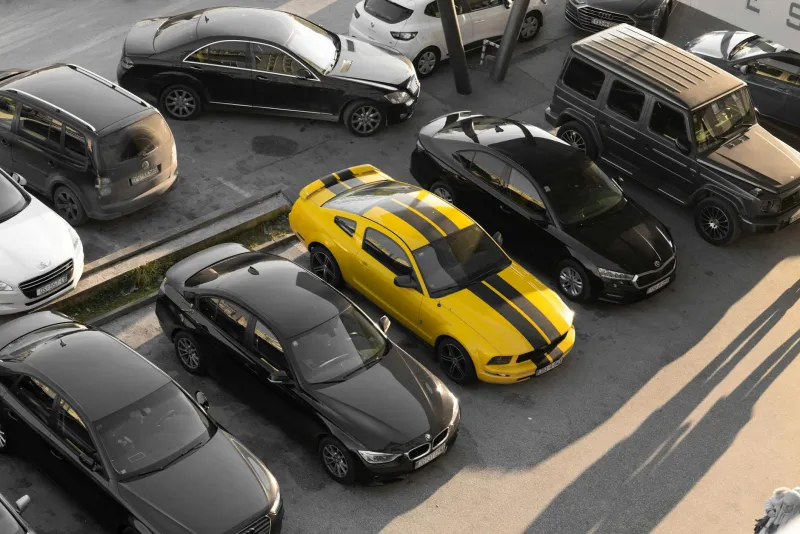
Red sports cars are supposed to hold value well, right? Only on actual sports cars. A red family sedan or SUV typically loses an extra $1,500 to $2,500 compared to neutral colors. Yellow and orange vehicles often see the steepest depreciation, sometimes 15% more than white equivalents.
The reason isn't aesthetic preference — it's market math. Dealers know that unusual colors sit on lots longer, so they pay less at auctions and trade-ins. That bright blue looked great in the showroom, but it limits your buyer pool when you're ready to sell.
Trim Levels: Where Option Packages Go to Die
Here's where the resale market gets truly weird. Moving from base trim to mid-level trim usually returns decent value. But jumping to the highest trim level often destroys resale returns.
A Honda Accord LX might hold 55% of its value after five years. The EX-L with leather and navigation holds 53%. But the Touring with every possible feature? Often around 48%. You paid $8,000 extra for the top trim and lost an additional $3,000 in resale value.
The used car market doesn't value complexity. Features that seem essential when new — like premium audio systems or advanced driver assistance — become maintenance concerns when used. Buyers worry about expensive repairs on high-tech features they might not even want.
The Options That Actually Matter
Some factory options consistently add resale value, while others vanish entirely. Navigation systems, once premium features, now hurt value because they're usually outdated and inferior to smartphones. Sunroofs typically return about 30% of their original cost.
But certain options maintain strong value: all-wheel drive in most climates, leather seats (even if worn), and premium wheels. Heated seats in cold-weather states often return 60-70% of their option cost. Remote start systems, surprisingly, almost always add value regardless of climate.
The pattern isn't about luxury — it's about broad appeal and practical benefit.
Regional Markets Tell Different Stories
A four-wheel-drive pickup in Montana and Florida might be the same truck, but their resale values diverge dramatically. Climate, geography, and local preferences create regional value variations that most national pricing guides miss.
Convertibles hold value better in warm climates but depreciate faster in snow states. Manual transmissions are worth more in enthusiast markets like California and the Northeast but hurt value in most other regions. Diesel engines command premiums in rural areas but penalties in urban markets.
Even color preferences vary regionally. White vehicles hold exceptional value in hot climates but perform normally elsewhere. Truck colors that work in Texas might hurt value in Connecticut.
The Maintenance Records Myth
Perfect maintenance records should protect resale value, but they often don't matter as much as people think. Most used car buyers never see detailed service records, and dealers rarely pay extra for them at trade-in.
What matters more is visible condition and major mechanical function. A car with perfect oil change records but worn paint and interior will typically sell for less than one with average maintenance but excellent cosmetic condition.
The exception: luxury vehicles and sports cars, where documented maintenance from authorized dealers can add significant value. But for mainstream vehicles, maintenance records are more about avoiding problems than creating value.
Mileage: The Overrated Factor
Everyone obsesses over mileage, but the relationship to value isn't linear. The difference between 30,000 and 60,000 miles matters much more than between 80,000 and 110,000 miles. Most depreciation curves flatten significantly after 75,000 miles.
Age often matters more than mileage for technology-heavy vehicles. A three-year-old car with 60,000 miles might hold value better than a six-year-old car with 40,000 miles, especially if significant tech updates happened in between.
How Dealers Actually Price Trade-Ins
Dealers don't use Kelley Blue Book or Edmunds for trade-in values — they use auction data and their own lot experience. They know exactly how long different vehicle configurations typically sit on their lot and price accordingly.
A dealer might see that silver Honda Accords with specific option packages sell within 20 days, while green ones with different options average 45 days. That difference translates directly into what they'll pay for your trade-in.
The Depreciation Curve Reality
Most people think depreciation happens gradually, but it's actually lumpy and unpredictable. Model refreshes, safety recalls, and even gas price changes can suddenly shift whole segments.
Hybrid values spiked during gas price increases in 2008 and 2021. Diesel values collapsed after Volkswagen's emissions scandal affected the entire diesel market. Large SUV values fluctuate dramatically with gas prices, while small car values do the opposite.
What You Can Actually Control
Choose colors with broad appeal, avoid the highest trim levels unless you're keeping the car forever, and focus on options that provide practical benefits rather than luxury features. Consider your regional market — all-wheel drive in Colorado, leather seats anywhere with sun exposure, manual transmissions only in enthusiast markets.
Most importantly, understand that resale value optimization and personal preference often conflict. The car that makes you happiest might not hold value best, and that's okay — just factor it into your financial planning.
The Real Lesson
Resale value isn't determined by what you think matters most about cars. It's determined by what the broadest group of future buyers will pay for. Sometimes that aligns with good car-buying decisions, and sometimes it doesn't. But knowing how the game actually works helps you make informed choices rather than expensive assumptions.