The Software Running Your Car Is Quietly Rewriting What It's Worth
Your Car Is Running an Operating System Now
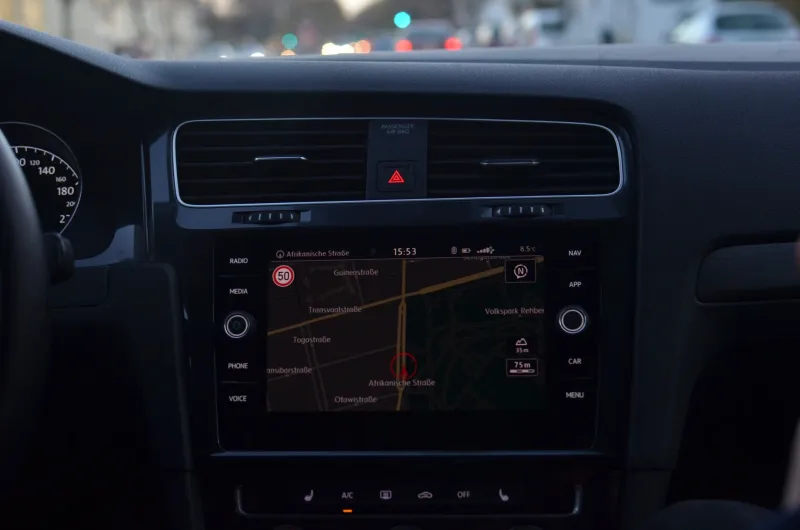
Somewhere in the last decade, cars crossed a line. They stopped being purely mechanical objects and became, in a meaningful sense, software products. The engine still runs on combustion, the wheels still turn on rubber, but the experience of owning and operating a modern vehicle is increasingly mediated by code — millions of lines of it, managing everything from throttle response to heated seat scheduling.
And like any software product, that code gets updated.
For most people, over-the-air (OTA) updates feel like a background convenience. Your car downloads something overnight, maybe the navigation maps get sharper, maybe a minor bug gets fixed. You wake up and drive to work and nothing feels different. It's easy to treat these updates the same way you treat a phone update — a quiet improvement you didn't have to think about.
But software updates can go the other direction, too. And when they do, the financial consequences can be surprisingly significant.
When Updates Take Away Features
The clearest example of this playing out in real life involves electric vehicles and battery management. Several automakers have used software to limit the usable range of their EVs — sometimes in response to safety concerns, sometimes as part of fleet management decisions, and occasionally in ways that weren't clearly communicated to owners.
In a widely discussed case, some Tesla owners found that software updates had reduced the maximum charge capacity of their vehicles, effectively shrinking the range they'd paid for. The physical battery hadn't changed. The hardware was identical. But the software governing what percentage of that battery could be used had been quietly adjusted.
That's not a hypothetical risk for resale value — it's a direct reduction in what the car can do, which is exactly what buyers pay for.
Beyond EVs, the issue extends into features that seem trivially small but aren't. Heated seats, remote start capability, advanced driver assistance settings, performance modes — all of these are increasingly software-governed, and several manufacturers have experimented with subscription models that can add or remove them depending on whether a fee is being paid. When a car changes hands, those subscription relationships don't automatically transfer, and what the car could do for the original owner may not be what it does for the next one.
The Resale Problem Nobody Is Accounting For
Here's where this gets practically complicated for anyone planning to sell a vehicle in the next few years.
A vehicle history report — the kind you pull from Carfax or AutoCheck — documents accidents, title issues, service records, and odometer readings. It does not document software changes. There is no entry that reads: February 2023 — manufacturer update reduced maximum battery charge from 100% to 90% or August 2022 — performance mode disabled via OTA patch.
Buyers have no reliable, standardized way to know what version of the software they're purchasing or how it compares to what the car shipped with. Two identical model-year vehicles could have meaningfully different capabilities based entirely on their update history, and nothing in the standard due-diligence process a buyer would follow would reveal that difference.
For sellers, this creates an uncomfortable reality. If your vehicle received updates that quietly degraded some aspect of its performance or functionality, that degradation is baked into what you're trying to sell — but you may not even know it happened, let alone how to disclose it.
The Manufacturer's Perspective (And Why It Won't Change)
Automakers have a reasonable argument on their side: OTA updates also improve vehicles. Safety patches, performance optimizations, new features added post-purchase — these are genuinely valuable, and the ability to push them remotely is one of the legitimate selling points of connected vehicles.
The problem is that the same infrastructure enabling improvements also enables restrictions, and there's no neutral third party auditing those changes from a consumer perspective. Manufacturers control the update pipeline entirely. They decide what changes get pushed, how they're described (or not described) in release notes, and whether owners are given any meaningful choice about accepting them.
In some cases, owners have successfully pushed back — particularly when updates caused measurable, documented reductions in range or capability. But those situations typically required organized owner communities, media attention, and significant persistence. The average person selling a three-year-old car doesn't have access to that kind of leverage.
What Smart Buyers and Sellers Should Be Doing
If you're buying a used connected vehicle — which at this point means almost any car from a major manufacturer built in the last five years — it's worth asking a few specific questions that most people don't think to raise.
First, find out what software version the vehicle is running and compare it to what it shipped with. For some brands, this information is accessible through the vehicle's settings menu. For others, you'll need to dig into owner forums where enthusiasts track version changes and document what each update actually did.
Second, look into whether the vehicle has any features currently locked behind a subscription that may have been active under the previous owner. Confirm which features are included outright and which require ongoing payments.
Third, for EVs specifically, review the battery's current maximum charge level against its original specification. A battery health report — available through third-party tools or manufacturer apps for many EV models — can surface whether software has constrained the usable capacity.
If you're selling, transparency is your best protection. Document what the car can currently do, note any updates you're aware of, and let buyers verify for themselves. It won't always be comfortable, but it's a lot better than a sale falling through — or a dispute arising — because a buyer discovered post-purchase that something had changed.
The Takeaway
Cars used to depreciate in ways that were mostly predictable: miles, wear, age, market shifts. Software has introduced a new variable that's harder to see, harder to track, and entirely outside the owner's control. The value of a modern vehicle isn't just in its hardware anymore — it's in what that hardware is currently allowed to do. And that can change overnight while you're asleep.